Join us in our public Facebook Group, where we will discuss these issues.

Monday, February 27, 2023

Get in touch with reality


 Fake vs Real

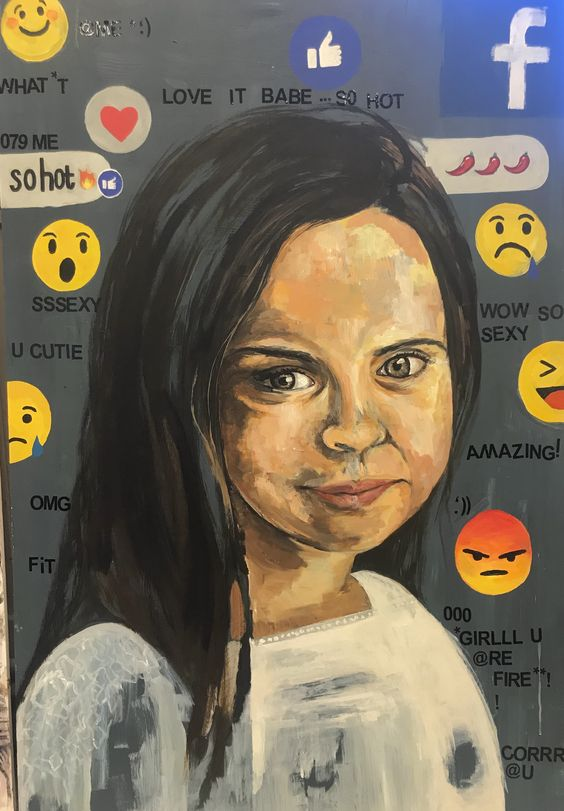
Social media or what I would like to call it screen time have been an upcoming topic since the early two thousands. Speaking from experience when I was in elementary school there was a popular game called Sims. Sims was a game where you can make your own person on the internet and interact with other people doing the same thing. your Character needs to eat sleep, and do almost everything you do in real life. Without me going any further don't you already see a problem with that? Imagine being a kid, or even have a child and they are playing this game constantly, I already see a problem with them differentiating what is real and what is fake.

The present

Today you see people...kids especially influenced heavily by what they see on what ever device they might be on. With me being so observant sometimes I ask myself why might that be? Number 1 it is easily accessible; Honestly I would call in the new pacifier for all. When people want to check out of the real world where do they go? straight to their phones. Ending things off correctly a lot of people have trouble separating real from fake!


Sunday, February 26, 2023

Is Social Media an Enabler of Narcissistic Traits?


                          Credit:(10) Pinterest                      

In the book the Qualified Self, Humphreys brings up an important question, is social media an enabler for narcissistic traits? Being self-aware is important to our well-being but being overly focused on one's self-importance and in need of attention from others is to be narcissistic. The self can be evaluated through the traces we decided to leave on social media. We can choose how we want others to see us, how we characterize ourselves, and how we showcase our accomplishments. The qualified self is the way we selectively present ourselves through our media traces. Some argue for the idea that social media can be a cause of narcissism making a person obsessed with themselves while others say that its primary focus is the connection you make with others. I will showcase both of these views and leave it up to you to decide or simply just think about the question at hand.

Why might social media cause people to be more narcissistic?

In the argument that social media does indeed cause people to have narcissistic traits, it can be seen in the sense that social media creates a desire to focus inwardly and become more self-centered. People who display these traits can be identified through the number of hours they spend on social media and the number of selfies they post. Studies have shown that women who hold narcissistic traits will be more inclined to post revealing photos of themselves due to the intimidatory self-presentation strategies used by a narcissist. Cyberbullying is another trait for narcissists on social media because it gives them a feeling of holding power over someone else.

Credit: kikimualifah.blogspot.com

When people use social media to flaunt looks and brag about where they are going and doing, they are looking to help validate themselves. A lack of self-esteem is a major part of the reason why they do this. A study done with 10,000 millennials found that 64% of people found that most think that Instagram is a more narcissistic platform than others like Snapchat, Instagram, and Twitter. There is an epidemic of narcissism in western culture, and it seems that social media has a role in this because it easily influences this behavior. A study found that people who posted a lot of selfies on social media have a 20% increase in developing narcissistic traits. Another study found that people who pose with others are less likely than people who pose for photos of just themselves to be narcissistic. So, though there is no definite answer that social media causes narcissism it is still found in some studies that an increased use of social media might cause you to develop narcissistic traits due to the opportunity to self-promote and enhance your ego. 


On the flip side 

Communication with the world around you is the argument for social media being positive. Some people even argue that to create content you have to be interested in the needs of your audience that you are creating content for; therefore, it is not really narcissistic. By focusing on your audience and posting despite your insecurities you are being considerate of how what you are sharing will be interesting to your followers. Posting on social media can be a form of self-expression that connects with the history of personal diaries being used to keep track of one's life. We wrote about ourselves and shared that with others, but it has never been on the scale that we do today. Sharing on social media can help us connect with others and build intimacy between people. By sharing the quotidian aspects of ourselves we are connecting with others so that when the bigger things happen it is more easily recognized. 

When we allow ourselves to become self-absorbed in social media is when we are at risk. Being mindful of the impact social media has on you is key to preventing yourself from developing narcissistic traits. Ask yourself questions like am I posting on social media to validate myself? Do the number of likes really define my worth? Be aware of where your self-esteem and work on building confidence that doesn't come from social media posts and likes. Young adults are especially more at risk from this so practicing self-awareness is the best thing you can do to avoid the negative impact that social media has on us. 


Sources:


HUMPHREYS, LEE (2019). Qualified self: Social media and the accounting of Everyday Life. MIT Press.


Saturday, February 25, 2023

Don’t Jump On The Hate Train

Social media style guide: what it is and how to get started - 99designs
1,280 × 1,280


FYP


People hate social media. Like they really, really, REALLY hate it. You would probably say for good reasons. I would agree only to an extent. What you feel is what you feel, so that is not for me to say if your hate is warranted. However, I guarantee that a majority of people's hate towards social media is misplaced. We want to be mad at the content rather than the fact that we choose what we consume. So often, I hear people complain about their "for you page" (FYP), and my first thought is, do they realize it is FOR YOU? whatever you do not like that is on there, well, it is there because of you. It is called an algorithm. Hate for social media is so misplaced, and the fix is easy. Let us create healthier media habits and foster social media into what it really should be. Only then will people start to love it as intended. 


The Narrative 


Initially, I do see the hate for social media. Most people need to take breaks and detox because sometimes the internet can be a toxic place. Social champ lists that the reason most people take social media breaks is because of their ego, anxiety, addictiveness, depression, self-doubt, lack of social skills, and privacy. Looking at this list, you see some serious issues. However, are these issues inherently tied to Social Media or instead poor practices that people follow? While this stuff Social Champ listed is reality does not mean we need to live in it. If you are afraid of the "lack of privacy," be more conscious of what you post. If you have an unchecked ego that gets hurt when you do not get 50+ likes, go to therapy. If you are addicted to your screen, then set better boundaries. Recognize how these are problems that rely on you. The answer is within you, and only changing your habits will fix the problem. 


My Personal Narrative


The other day I was talking to another student, just trying to be social. I invited him to my BSU meetings, but I also told him to stay connected and up to date; he should follow our Instagram. Then my other friend proceeded to turn to him and tell him not to download social media and that it was a "waste of time". To me, that was an absurd comment. I manage two social media accounts: one personal and one for work. I also monitor the social media of a third page, but I do not do the posting myself. I see the beauty in social media because I consume so much of it, and I have for years. In my personal intake, I have consumed unsavory media from time to time. However, that was in no way the media's fault. Humans hate taking responsibility, so they instead like to blame intangible entities that exist but not in the same physical way we do. I absolutely loathe people who do this. It is single-handedly my biggest pet peeve. When T.V. and other forms of Social Media are placed into societies that previously did not have them, we see a considerable jump in eating disorders and self-image issues. Now, most people blame the media. However, why are we not blaming ourselves for first promoting unhealthy and unrealistic body standards? Secondly, why did we not teach these people how to consume media responsibly before we introduced it to them?


Come Back To The Real World 


Do not delete Social Media. That is so tacky. Put the phone down! Come on, man, just listen. I am almost done. "Social Media breaks" should not be an entire break from social media. Do you know what all warrants as Social Media? Because I know for a fact you are most likely not about to cut out TikTok or Youtube. If anything, "breaks" from social media should be the stopping of posts. Be a consumer. So often, I see people say they are going to take a "break," and my initial thought is, "you do not even create anything. What are you taking a break from?". To say you are taking a break implies you were working or using that specific form of Media. If you are a consumer and not a creator, then why do we refer to it as taking a break instead of just turning off Instagram to go watch cat videos? Let us take the "seriousness" put of social media.


Changing The Narrative


Put yourself first. Whatever you consume, whatever you do not want to consume, whatever weird stalker you are avoiding, you decide. Take back the narrative and stop thinking someone controls what you consume. Because while there quite literally is someone who does that, it is their job to make sure what you consume is based on what you like to consume. Say no to something cringing, press that "see less like this button," and go about your day. If you want to create content without unnecessary pressure, then set specific days for creating content and let yourself be a consumer on the other days. When you are a consumer, make sure what you are consuming is kind towards you and others, education, and overall something that brings you joy. Connect yourself to the world, not what Chris Pratt eats in a day (unless that is what makes YOU happy, of course). Go out there and make Social Media a better place for you first and others second. 


The Best Rooftop Bars In Cluj-Napoca
800 × 536


Just Live


The main takeaway I want is for you to take back your power and stop letting people tell you something is "bad" simply because they use it improperly. Anything in the wrong hands can be used for evil. Go out there and develop the necessary skills to properly use Social Media and one day teach others how to as well. I never pass up a chance to tell somehow how great Social Media is because I genuinely believe it to be great. It just takes finding the right crowd and a little bit of practice to foster those healthy habits. At the end of the day, if my advice or testimony does not work for you, then do what makes you happy but absolutely do not go out and ward others off from one of the greatest inventions of our time because of your experiences. Let people live and foster opinions on their own. 


Works cited


13, Laverne Gagliano September, et al. “Why Would One Say, ‘I Hate Social Media?".” Social Champ, 14 Sept. 2022, www.socialchamp.io/blog/i-hate-social-media/#.

Sunday, February 19, 2023

It's not impossible to be a wallflower

 Psychology 101: Fear of missing out: FOMO - MozartCultures

It's not impossible to be a wallflower

Social media tends to have this certain impression that bounces from one person to another. For example, what happens to one person may influence others to be exactly like them, and if not,  it will persuade them to buy or get exactly what that person has. It's the influence of the media.

The Perks of Being A Wallflower is one of the movies that gave me a good perspective on anti-socialism and showed me the sides of teenagers and how they are surrounded by many different people. One character in the movie, Charlie, was a very antisocial depressed teenager who did not have many friends going into high school until he met two people who then became very close to him. They called him a wallflower as he was happy with how he was with his personality and did not change for anybody, instead he was accepted to be who he was. Comparing this to social media nowadays, nobody can be called a wallflower, or at least many people. When this movie came out in 2012, it was during a time period when social media was not much of a thing, and when people would post, it would be genuine. As time went on, so did the media, and what is posted now is seen everywhere. What I mean by this is many people are doing paid partnerships for growing or expanded companies, and a new product is being delivered to individual followers in hopes to gain attraction and help the company sell this product. I like to think of social media as a ripple effect, once somebody has something you like, you buy it, others buy it, and the list goes on. 

Going back to being a wallflower, I don't see very original posts as much as I'd like to, but I am a very optimistic person and I like to see change. Many people are always complaining about nobody being original when it comes to media or even their true personalities. Many young teenagers who have seen the movie "The Perks of Being A Wallflower" took the movie to heart because they could relate to Charlie's loneliness, or did they understand the bigger picture? 

Why does media change the way we think? 

In an article, I read by the A&M school of education and human development department, Shed Communications states that social media can affect one's bias. If a person has a set belief system in their mind, they're only likely to pay attention to what they already believe through the media. Heather stated that "social media influences people to take action for or against a cause." If one's social standards and social values are easily affected and influenced by others, is there room for progression? No matter what, a person can always improve themself and if they don't want to, unfortunately, they're in a shit show for a lifetime. 

But why? 

Take the values you grew up with, you were raised to have certain mannerisms, right? growing up with the ones who surrounded you at home, is the base for who you surround yourself with outside. An only child for example might have different values than a person with five different siblings. That can be the same for social media, as for me, I like to watch minimalistic organizing videos because I want to have that type of reality. I know that I want that, and I have to be honest with you, I have gone out of my way to buy some type of organization stuff that was way more expensive than it should've been all because I saw a video on Tik Tok that influenced me to buy it. 
Coming to a realization that society needs to get its head out of the media is like a ticking time bomb. You're either a wallflower who doesn't strive to match others' expectations, or you're one whose easily influenced, and if you are, I am concerned about how your reality will look in the near future. 

If you're a wallflower, embrace it, and if not, maybe one day you will be!


Communications, SEHD, and About SEHD Communications. “Can Social Media Change Our Opinions?” Education and Human Development, 23 Jan. 2023, https://education.tamu.edu/can-social-media-change-our-opinions/.


Your Past Only Affects You If You Let It

 Your Past Only Affects You If You Let It 

By: Jacob Forton / February 19, 2023


Background:

Often times as we grow up in this game we call life, we as humans feel like if sometimes we have everything figured out and at the same time can be lost feeling as if we are never gonna escape the reality we are in based on the circumstances we face. Life is about making decisions and within each decision we make, we face a consequence whether its good or bad. These consequences are influenced on many external factors such as the friends we are with or situations we are in within our own lives that lead us to make a decision based on what our feelings or emotions wanted right in the moment. Sometimes people place labels on us based off our choices we make, however for the fellow struggler, a poor choice doesn't define you unless you let it! 

Click of a button: 

Furthermore, with social media's popularity and the dangerous amounts of time we spend on a screen, it's not only easy to pull up old memories of ourselves but also easy for people to see who you were once before just with a click of a button. For some like myself, I was labeled all kinds of names growing up, anywhere from "Scarface" because of my acne, no neck because I was heavy and practically lived in the weight room. But the worst one that I couldn't control were the comments about my height. I remember letting the judgement from others get to me whether that was face to face or on social media because people do tend to say some hurtful things which brings down your confidence. Obviously in a situation like this you have two options, you either change the things you can change or you hide and let others know their comments hurt you. 

In addition, I chose the route of change and so I went on a diet lost weight and started seeing my neck again, I even hopped on Accutane and now have a clear face, however doing all of these things as a senior in highschool I would be so embarrassed of how my new college friends and teammates would be if they ever saw who I once was. However, in reality once I got to college, I realized that my friends now don't see those old photos of me as anything but a memory because that was so long ago. 

If i could tell young me anything it would be that even though social media can make you look bad, or showcase some of our most embarrassing moments, your past doesn't follow you unless you let it. The past is something we must go through to figure out who we truly are. I am thankful for those hurtful comments and those sleepless nights wondering why people could be so mean, because ultimately it allowed me to reach my full potential. Whether I want to admit it or not hurtful comments and hate comments on social media sometimes are possibly true and if you give in and don't try to change you will stay in the same weak headspace and carry that on with you throughout life. 

Use the past as a stepping stone 

To the guy who thinks their past can't be changed, or feels like its still following them, think about it like this, it is only up to you to change and photos can always be deleted or edited. Therefore, why can't we update a new picture of ourselves by putting our past to the side and focus on the now. At the end of the day everyone uses social media in fake ways to make themselves look "cool" so how cool would it be if one day you posted and got nothing but love on your comments because you chose to make a commitment to be the best version of you instead of hiding in a shell afraid to be seen because of others judgement. 


Screen Time: The Negative Effects


    For this blog post we studied another phenomenon that we are guilty of every day.  Screen time.  In today's digital world, screen time has become a significant part of our daily lives. Whether it's checking social media, watching videos, playing games, or sending emails at work, most of us spend a considerable amount of time in front of screens. While technology has undoubtedly made our lives more convenient and connected, excessive screen time can have negative consequences on our physical and mental health, social interactions, and cognitive abilities, impacting today’s youth in a way no generation has seen before.

Physical/Mental Health:

    One of the most significant negative effects of excessive screen time is its impact on physical health. Prolonged use of screens can cause eye strain, headaches, neck and back pain, and other musculoskeletal problems. These physical health problems can be especially concerning for children, whose bodies are still developing. Additionally, excessive screen time can lead to a sedentary lifestyle, which can contribute to obesity, cardiovascular disease, and other chronic health conditions.  Excessive screen time can also have a negative impact on mental health. Studies have shown that people who spend more time on social media are more likely to experience anxiety, depression, and other mental health issues. Social media can create unrealistic expectations and fear of missing out, leading to feelings of inadequacy and isolation. Additionally, excessive screen time can interfere with sleep patterns, leading to fatigue and mood swings.

Social Interactions:

    Another significant consequence of excessive screen time is its impact on social interactions. People who spend more time on screens may find it more challenging to develop and maintain social relationships. Screen time can interfere with face-to-face communication, leading to a decrease in empathy and social skills. Children who spend more time on screens may also struggle with socialization, as they have fewer opportunities to interact with peers and develop social skills.  One thing I have noticed, especially with my three younger cousins (12,10, and 6-year old’s), is that they seem to be very aware as to what is happening around them, and seem to care more about how people perceive them.  

Cognitive Abilities:

    Excessive screen time can also have a negative impact on cognitive abilities. Studies have shown that children who spend more time on screens may have difficulty with executive functioning skills, such as decision making, problem solving, and impulse control. Additionally, excessive screen time can lead to a decrease in attention span and memory retention. These negative effects on cognitive abilities can have long-term consequences, leading to decreased academic performance and reduced opportunities for success.

    Parents can play a crucial role in helping children establish healthy screen time habits. They can model healthy behaviors by engaging in other activities, such as outdoor play and family time. To address excessive screen time, it is essential to establish healthy habits around technology use. This includes setting limits on screen time, turning off notifications, and practicing mindfulness to be present in the moment.  Parents can also help children develop a healthy relationship with technology by setting clear rules and expectations around screen time and providing alternatives to screen-based activities.  Keep in mind, this generation of parents is the first to deal with these types of issues.  Fifty years ago, parents would have never thought in a million years their kids would be glued to a screen.

    In conclusion, excessive screen time has become a growing concern in today's digital world. It can have negative consequences on physical and mental health, social interactions, and cognitive abilities. To address this issue, it is essential to establish healthy habits around technology use and prioritize real-life connections over virtual ones. By doing so, we can create a more balanced relationship.


Works Cited

Picture- Miro.medium.com, https://miro.medium.com/.

Why is Social Media Harmful For Kids?


            Background 

         Social media has blown up in the last decade and has impacted everybody in the world. No matter how old we were when it blew up, we were effected by it whether we started using it or was just a follower that never posted on any social media. As technology has grown, it has become easier to gain access to devices that are able to view social media. In this case, kids are introduced to social media at a young age and can be influenced by its presence. Before social media became a thing, memories of our childhood were kept in scrapbooks or physical picture copies that only few people could view, but not anymore. Now that social media exists, anybody can see what you used to be as a child if your parents post pictures or videos and there is no hiding from it. 

            Positives  

           Growing up with access to social media can sound scary to parents or adults because of the bad things that can be posted on it and kids have the chance to see it and ruin their innocence at young age, but it has some positives to it. One positive is that kids are allowed to express themselves and can become their own person at a quicker age because of the information that is out there. When gathering information from social media kids are allowed to process it and learn to have their own opinions at a young age. Another positive is they are allowed to talk to friends or other kids they know from school or close by without having to be with them. This helps them learn how to interact with people and make friends compared to only being able to see them when the parents let them see each other and have little social interaction with others. With positives there are always negatives and can out way the positives. 

            Negatives 

          Everybody has embarrassing moments growing and have gotten lucky with being able to get away from them with little consequences because they can only be seen with hard copies and stories that are told of those moments. Not anymore, kids now have to live with the consequences of these embarrassing because of social media and the ability to look back at the memories that anyone can look at once it is posted. This holds a strong grudge over kids posting on social media because of the consequence they will have to live with later on in life. Once something is posted it can be deleted but never truly away from everybody on the internet. With this kids growing up have to live with these memoires hanging over their head and cannot grow up and get away from these haunting memories that they do not want to be seen. This makes it hard to edit their own childhood and make it hard to have good memories of a happy childhood. With the ability to see the embarrassing childhood memories it is hard to see through that and view the happy moments kids had growing up when they are older because all they can see are the weird pictures they wish were not on their social media. Childhood should be a good memory and can reminisce on the happy moments growing up. Adults have grown up and have learned to forget the moments they did not enjoy growing up but can be a difficult task with the invention of social media when they were younger. Before social media people were able to start new and change identities and can embrace their new selves without worrying about who they were before but now with social media people can always tie you to the person you were before which can be a struggle and frustrating. With this being said it restricts kids growing up to little lifestyles and cannot change to someone new with people connecting to who they used to be to who they are trying to be now. I know I have changed drastically since I was younger and only very little people know who i was before and glad they do not know who I was before because honestly they would probably not want to talk to me. With this fresh start I am able to open myself to new opportunities because social media was not as big when I was a kid and people can not see who I used to be. The point of growing up is being able to change who you want to be and not who you used to be. 

            So What? 

           I did not write the pros and cons of social media at a young age just to write it, I want to show that posting pictures of embarrassing moments of kids can be harmful in the future because of the trouble to get away from those moments. Restricting kids from social media is almost impossible with technology now but can prevent them from posting something they will find to be harmful to their personality further on down the road. People need to pay closer attention to what they are posting before they click the button that allows anybody in the world can see. Parents can restrict the ability to allow their kids to post on social media and monitor to what they are watching on social media platforms and as technology grows there are more kid friendly apps that allow the same positives with very little negatives as normal social media posts. 

Final Paper, Part 2: Literature Review

hdstsytsdystsutsyt Literature Review Social platform reddit can tell us a lot about the impacts pandemic. For example, Hossu and Pardee ( 20...