Join us in our public Facebook Group, where we will discuss these issues.
Showing posts with label Unit 2 Blog 1. Show all posts

Sunday, February 27, 2022

The Timeline of Our Media


Dinosaurs! Ancient creatures. Nobody alive today has seen such a thing. And yet, they are still a HUGE topic of discovery. In fact, a new dinosaur was actually just discovered a few weeks ago in Argentina.

But even things as "old" as floppy discs from the '90s seem ancient to us now. And those were only 30 odd years ago. 

That brings me to the topic of the blog for this week: time. No, we aren't talking about dinos or floppy discs (sorry to disappoint). We are talking about how things that are popular at one time or another either die with the times or resurface another day. 

Raymond Williams, a Welsh socialist writer, actually has names for these things...

        Archaic

        Residual

        Dominant

        Emergent

The archaic stuff is like the floppy discs. Popular one day, but as new technology emerges we lose purpose or interest in those things.

The residual stuff is like vinal records. They come and go. The overall populations' interest in these things peaks and falls every few years or so. Right now, people love the idea of living in the past so the vinal records and record players are back in business...for now...

Dominant things are like Pokeman or dinosaurs. Things that will always have (or have continued to have) sway on people because the major population either is or isn't interested in it at the time. This is like when Pokeman Go was a big thing, but now if Jerry asks to go to the park for his Poke-stops everyone looks at him crazy. Or when Jurassic World came out and they decided to throw Chris Pratt in there. The series died a long time ago but because Chris Pratt was now the main guy and Dinosaurs, in general, are interesting, then why wouldn't you go to the movie to watch it. (But if your favorite movie in the Jurassic series is Jurassic World, don't talk to me).

The emergent stuff is like TikTok or Vine. What is popular right now. Normally it is quick-lived but we enjoy it for the time being. Everyone knows about it and everyone is on it.

We can actually play with this "timeline" so to speak. We see this a lot in movie remakes or reboots nowadays.

Jumanji, for example. Originally came out in 1995 with Robin Williams. Two kids play a board game that comes to life and accidentally free a kid who has been stuck in the game for 20 years. A crazy concept in the '90s!

22 years later, it's back. New people. New game. New times. They play off the nostalgia of all the people who saw the original Jumanji, but if you ask kids nowadays, they don't even know who Robin Williams is and have no interest in finding out. They are too caught up in the excitement of the idea that they too could be sucked into their own video games.


They even play off The Breakfast Club and through 4 completely opposite kids, who otherwise never would have met, into detention together, and by the end of it, they come out friends. So many popular movies with that trope have seen success, so why not Jumanji too?

The writers, directors, and producers all used these residual and dominant things to help create a new, emergent movie that feels new and fresh (and even went on to have a sequel).

We see this too with social media. Things coming, going, sticking around. Popular memes change all the time. Which app should be used the most, changes. What kind of content is popular, changes.

TikTok alone has been a huge social media platform for the last few years now. During the pandemic, it was popular to post dancing videos, simulating the previous app: Musically. Then it moved to short, funny videos like Vine. And now that stuff is harder to find. Now they take movie/tv show sounds and use them ironically, there are challenges, filters, storytime.

For now, TikTok is the place to be because regardless of how old you are, if you wanna reminisce, the for you page (FYP) will show you those archaic floppy disc repair videos. If you wanna see the newest dance video, it'll show up. If you wanna just scroll and see exactly what everyone is talking about, it'll show you that too.

Raymond Williams' cultural practices are a concept that has been around and will stay around for centuries to come. It continues to work and be true in fashion, television, media, and more

Tuesday, February 22, 2022

The Spreadability and Importance of Memes

Spreadability of Memes

     It took many years before internet culture became heavily prominent and inescapable. It was not until the 2000s that the internet became widely accessible and nearly everyone had a smartphone or computer. When that change came, along with it came to the internet culture that would be cultivated and eventually grow into the beast it is today. A long time ago, in a galaxy exactly like ours, before an egregious amount of memes and comedic videos were all competing for virality and uniqueness, the internet was a fairly predictable space in terms of media that was shared. There were of course cute cat videos, people getting pranked or hurt, dogs riding skateboards, and of course, the earliest forms of memes. I must admit, just doing a quick google search of 'old memes' to get into the mindset for this post made me cringe. How the hell did we ever think that depicting Chuck Norris as an all-mighty and powerful being was funny? How did we think that a stock image of a random person with big captions on the top and bottom of somewhat relatable text or stereotypes was hilarious? Well, everything looks better (or worse) in hindsight, however, hindsight also gives us the power to analyze the past and identify actual causes. 

    As discussed before, the internet was not widely accessible for a long time, so internet culture was nearly nonexistent before social media and smartphones started becoming mainstream. After that boom in internet access and the further development of social media, normal people were now given a shared space to spread and distribute media. As the authors mention in Spreadable Media: Creating Value and Meaning in a Networked Culture, "The shift from distribution to circulation signals a movement toward a more participatory model of culture, one which sees the public not as simply consumers of reconstructed messages but as people who are shaping, sharing, reframing, and remixing media content in ways which might not have been previously imagined" (Jenkins, Ford & Green, 2013). Within one quote, the life and meaning of memes are revealed clearer than ever before. The earliest memes are examples of infantile internet culture, the beginning of poking fun at others for the sake of entertainment that is relatable and "funny" to mostly everyone. However, the reason most of these early memes are cringeworthy and outdated now is that they were some of the first types of content that people were able to participate freely in ever! Memes quickly evolved and developed within the pressure cooker that is the internet, and their purpose and unique spot in internet culture were cemented.


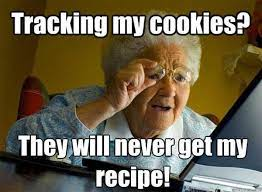
    Memes, typically, feature a recognizable image paired with a caption that enhances the comedic value of that image. While memes have a huge variety of formats, most of those formats have a basic framework that people have to abide by to create an acceptable new meme within the format. This reflects what Jenkins was discussing in the previous quote. Now, within internet culture, memes themselves can be shaped, shared, reframed, and remixed to create new content that we did not have before. In the past, around the 2010s, memes were fairly mundane and reflected cultural attitudes towards certain people, events, and concepts, whereas now, internet culture has transformed memes into this: 

An amalgamation of various internet-based inside jokes jumbled into a singular meme that only people who spend too much time on Twitter or Reddit will understand. 


    Evidently, the craft and methodology of curating memes have evolved exponentially, and they are themselves a catalyst for spreadable media. They are quick to read and understand, and nearly anyone can create them if they put in the effort. Now, only a few memes/meme formats that come along have the chance of becoming viral or widely known across the internet and general public, however, all memes are examples of how easy it is for anyone to create media that can be shared and spread around. 


    Arguably, memes are one of the only types of internet content that have high spreadability and can be accessed easily by everyone. Each social media platform has a certain uniqueness to it, however, all of them have become spaces in which memes and jokes alike can be shared and spread, even across platforms. It is not uncommon to see a meme on Reddit or Instagram and notice that it is just a screenshot of a Twitter post. That being said, those who create memes are hardly well-known or praised, so it creates a system where everyone feels as though they can participate in the fun. These little snippets of comedy not only spread like wildfire and represent the large magnitude of internet content, but they actively reshape, remix, and reform internet culture within that process.      


    Memes represent the status and condition of internet culture at any given moment, while also serving as a curator of said culture. Going back to the Jenkins quote from Spreadable Media, memes represent the idea that anyone can create, share, and circulate media in this new age. Simultaneously, memes also contribute to and shape the progress of internet culture and what it looks like at any given time. 


Final Paper, Part 2: Literature Review

hdstsytsdystsutsyt Literature Review Social platform reddit can tell us a lot about the impacts pandemic. For example, Hossu and Pardee ( 20...