Join us in our public Facebook Group, where we will discuss these issues.

Tuesday, January 25, 2022

Social Media and your I

Hey there everybody! My name is Jessica Bailey Hudgeons, I prefer to go by Bailey so I am sorry for any confusions, worse case I still respond to Jessica. I am a Junior at Texas Lutheran University studying communications. This is my first post to our class blog, so I figured you deserve a small little introduction. 

Today social media is the platform for popularity. You develop your pages and posts and put yourself out there into the world. As you are doing this you are creating your "me." 

?What does that mean? 

That is probably the question you are asking yourself. You know you do this, but what exactly is this thing that you do? 

To keep the suspense to a minimum here is an explanation. There is this American Social Philosopher named George Herbert Mead who developed this theory of the "I" and "Me". Basically, these are two different versions of yourself that you have. The "Me" is how society sees you, and the part of you that is considered socially acceptable, everything is well thought out and not impulsive. The "I" is the response to the "Me" which may be more impulsive and not as accepted by society. With this being said I am now going to dive back into my original comment that social media is a platform for your "me".  


To narrow down the entire universe of social media I am going to go in depth about Instagram. The nostalgia of this old logo reminds me of a time when I didn’t over think social media like I do now a days, it was all just whatabugs and very fierce. However, overtime Instagram has become a platform where you have to put your best self forward. Just like this newer logo. 


As you sit on your phone debating whether to post that picture or not you are comparing yourself to societies norms. Trembling with fear about what everyone will think and if it matches your aesthetic on your page.  As your knees become weak and your arms become heavy you are assembling your “me”. Thinking it over and over to see if this fits societies current norms and all the trending trends. Social Media doesn’t show half of your true self including your “I”. This is a blessing and a curse. If you have something to hide you can just as easy as catfishing someone. Personally, I don’t use social media often due to this standard of posting something that fits what everyone else wants and not really what I want. Personally, I wish that more of our “I” would be presented on social media. But impulse posting is a thing of the old logo.


Another key insight to this theory about the “I” and “me” is that through social media platforms such as Instagram you can profit if your “me” is socially acceptable. Let’s look at an example of this. I would like you to meet Addison Rae. 


This Instagram influencer makes about 156,000 dollars per advertisement that she posts to her 40.2 million followers. She averages about 1.6 million likes per post. Her representation of her “me” started her influential career on Tik Tok, acting for Netflix and she even appears on Keeping Up with The Kardashians. Over time she has gained many brand deals that lined up with her persona and she continues to profit today. She keeps her advertisements within her aesthetic and continues to profit over and over again. Despite some recent backlash from other social media users… but she still seems to make it work. By creating a strong front of her “me” she is able to post and profit off of other companies and businesses. 


There are many other examples on the Instagram platform that profit off of the way that they present their “me” and the companies that they strategically chose to partner with. I feel like putting Mead’s theory into this perspective is the best way to describe this theory in today’s world. Almost everyone is on social media, and this is one of the most relatable ways to describe it in my opinion. Social media and the way you present yourself to the world creates the image of how other people see you, the “I”. And your actual personality and the way you are represents the “me”. As you are trying to navigate the confusing world of discovering your “I” and “me” and all things Mead, hope this post can help you take things into perspective. 


Try and think to yourself what this article makes you think about me. What is my “I” coming off as? We all know that all posts are permanent and with this being my first blog post lets go on this journey together and see how my “I” further develops throughout the course of this semester. 


Bailey Hudgeons signing off. 


your life in posts

 lately, since Instagram and Snapchat have been the diaries of this time I feel like most people dont use a book to write anymore.  social media has taken over the world in many ways,  but I feel like what it has most affected is the way people document their lives. in Snapchat, we have memories were videos or pictures you have taken can be saved and seen anytime you want rather than you write down in a travel journal or diary that you used to keep with you. on Instagram we've developed something called highlights where we can post certain things in certain categories based on what we've done or what you have set that category up for. I feel in my opinion that this is kind of a bad thing, see where I look at it I feel people can really find out who you hang out with and who your company yourself with. i feel like most people don't think about stalkers and people that are weird that try and follow you and see where you go, I don't usually post just because of this. I feel like people today have gotten too comfortable with their posts on social media and don't really think of the many risks they are taking while doing this. I feel keeping a journal to keep all your day-to-day activities is smart and something people should get back into because posts you have made can always catch back up with you and can always get you in the end. another thing I've seen a lot lately is vlogging when people go on trips, I feel like when people do this they take away from the actual joy of just going on a trip because half the trip they are just recording themselves going on these trips and explaining everything they're doing. don't get me wrong I like watching them sometimes but at the same time it gets me thinking about how their trip actually goes and if it were me I would be annoyed if the whole time I was on a trip someone was recording and talking about there day because most of the time when people vlog they have this fake tone of voice like they become a person that they arent and start being fake then you see how they are in real life and its like boom completely different person. from the ideas I've seen in the Humphreys book we've been reading is a lot of negative things about social media and I honestly have become sided with disliking social media, especially tik tok, tik tok has something in it that can find your location and puts videos that much up with exactly how you are and sometimes me and my friends will test it out to see how it works. we once had played a tik tok next to my friend's phone and then a couple minutes later we saw the same tik tok on his phone. social media is cool and all but I feel like some aspects of it arent really deeply looked at and are pretty scary to think about.

My Relationship with Vlogs

    In the years of my adolescence, I often felt lonely. Despite going to school and having at least a few friends, I still felt alone with them, never truly able to express or find myself freely without judgment. During that time, I was immersed in various YouTube personalities and videos of people playing video games, making content that middle-school King found hilarious and amusing. Over time, I would subscribe to certain individuals and grow a liking to their style of video and humor. There was one gaming content creator I liked called "WhosChaos," who moved out of his parent’s house to live with his online friends to make collaborative content as well as continue his gaming videos. I found out that he belonged to an organization (org) called Team Kaliber (TK), an org that was involved with various eSports, as well as content creation. From there, I was exposed to a whole world of people and a community that I was yearning for. Gradually, I started to watch the friends of WhosChaos and even started watching the content of the house and organization owner, Kosdff (Kos). 


    Kosdff founded TK and brought people into the org as content creators for the team house that they all lived at. Furthermore, he started a daily series of "Vlogs" that would feature members of the team house and the antics they all engaged in while living together. At the time, I had dismissed vlogs as boring videos of people thinking that their life was interesting. From what I had watched of them, it was just average people with extra charisma showing me the mundane of their life: going to the grocery store, playing with their dog, etc. At first, I did not watch a lot of Kosdff and his daily vlogs. From my previous impression, they were not something I would enjoy so I continued to watch whatever gaming or humorous IRL content the TK creators would put out. However, one day, I was especially bored and noticed a video in my recommended that featured everyone in the team house going outside for a paintball battle. My interest was immediately piqued at the possibility of seeing my favorite content creators fight each other with paintball guns. I noticed that the video was uploaded from Kosdff's vlog channel, and despite the previous sentiment I held toward the video format, I pressed on. After that, I was hooked; the vlogs Kos made were entertaining and held my interest. Though they were just videos of gamer friends fooling around and having fun, doing crazy shenanigans either out and about or at home. Suddenly, that lonely feeling that would intrude on my life felt less intense.


    Whenever I got home, I would check on the vlog channel and see what my favorite creators were up to. It became a daily ritual, and eventually, I branched out to a few other vloggers I would watch on occasion. I found creators like Roman Atwood, a family man who would vlog his family's life and their antics, as well as Casey Neistat, a YouTuber who was perhaps the most well-known vlogger in the community at the time. Vlogs, which I previously had no liking for, had become a secondary type of video for me to enjoy (Talk about second chances). In my present life, I hardly watch vlogs, but at the time, they meant something to me and I was invested in them, however, the true question is: why? 


    Vlogs were prominent in my YouTube watching during a time when I felt alone and dissatisfied with life. Vlogs offered a view into a whole other world, a whole different lifestyle. I got to see these content creators grow and live out their lives, move to new places, meet new people, and make new friends. Vlogs showed me the best parts of life and the fun that can be brought to the mundane. In Kos' vlogs, there was always a sense that the people I was watching were real, as close friends. It did not take much to entertain me when it came to them; all I wanted was to see them laugh and have fun. A video as simple as "hide and seek" was immensely entertaining to me, even more so than vlogs where a lot of money was spent on a project or idea.  In retrospect, vloggers like Kos and Casey Neistat likely did not get a single day off of work because they needed to film and edit a vlog with an interesting concept that would get views all in a day. Vloggers can get so eager for views that they feel the need to do over-the-top antics to capitalize on the possibility of more clicks. The issue with this is the vlogs start to be less genuine and engaging. For instance, Roman Atwood would feature vlogs of him blowing up stuff or riding ATVs, and I found those to be less entertaining than watching a house of goofball gamers cracking jokes while playing hide and seek. For me, the reason I watched and enjoyed vlogs was to briefly escape my dull life by being immersed in someone else's, watching them have fun making costumes out of household items, or buying and riding in a kayak, or making their 37-year-old friend do skateboard tricks in an inflatable costume, or any of the other crazy ideas that were filmed. Vlogs were great to me because they could be anything. I could watch the most sincere moment between friends, or the wildest, most elaborate activity. Anything I thought I was missing out of life, I could find in vlogs. Wanna watch someone live in New York City and film their life of adventure, or maybe a genuine family man having fun with his kids? well it is out there. In vlogs, there is something for everyone. 


    Like everything on social media though, vlogs only show people the best parts of life, without addressing the issues that make it less interesting. It would be weird if vloggers filmed and uploaded themselves washing the dishes, doing laundry, or filing taxes. This does not mean that all vlogs are disingenuous (though there are a lot of them that are scripted), however, the 100% truth of life is never fully shared online. At the end of the day, vloggers are simply entertainers tasked with making everyday life seem fun. It is almost like reality TV, being able to look into people's lives and become invested in them as a person, all while knowing that you will never actually get to know them.


Social Media in Children

Effects of Social Media in Children


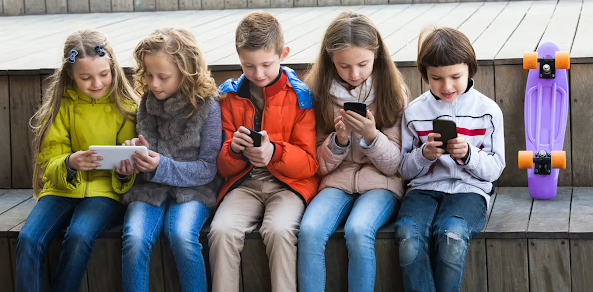
 Did you know that of the 328 million people who reside in the United States, over 247 million people use social media on a daily basis. That is over 80% of the population. In 2008, only 10% of the population used social media, making this increase of 70% in just 12 years, astonishing. Social media, as we know, is taking over the world, and in some ways, has taken over people’s lives, especially children. Social media. Good or bad? Think about it, all of us nowadays own smartphones and have some type of social media app that we use constantly, it’s a way of life for some. The trendy thing now what kids want to become is to be tiktok famous and youtube famous, and the crazy thing is, you can make a living off of being a social media star.  A  young 10 year old girl by the name of Tiana Wilson has a youtube channel called “Toys and Me,” where she has over 9 million subscribers and over 2 billion views on her channel at just 10 years old, and Forbes estimates her net worth at a whopping 10 million dollars. Young kids will do whatever, wherever, and whenever for camera fame, some for the good and some for the bad. Social media is not a bad thing in all ways, there are many good things that social media has brought for us. As children, social media can affect many things in a positive and negative effect for their growth and learning. So whether or not you think social media is a good thing or a bad thing, I am here to talk about 4 different ways social media has a large effect on children in the world with addiction, communication skills, bullying, and social status in the world we live in today. 

Four Main Reasons

  1. Addiction
  2. Communication skills
  3. Bullying
  4. Social Status

Addiction

The question I ask is, is children being addicted to their phone a good or a bad thing for their development and growth? What do you think? First off, you have to ask yourself if being on a phone 4 hours a day scrolling through things that really don't have an affect on one's life really a good thing for children? Imagine a world where we have no face to face communication. To me, face to face interaction is one of the most important things that children develop in their young years, children who don't get this interaction never learn how to talk socially to another human. This addiction stems from constantly wanting to be on social media apps and doing whatever is “trendy for the camera.” Rushman indicates, “Research from both the United States and the United Kingdom indicates that the major alcohol brands maintain a presence on Facebook, Twitter, and YouTube, (Rushman 2015).” With that being said, kids have a major influence of seeing these things all over the internet, but is this really a huge problem? Let's look at the other side for a minute. Yes, social media increases the chance that your kids might see alcohol and drugs and maybe they are influenced by this, but let's be completely honest, alcohol is consumed by a lot of parents in front of their kids at a family get together or party, so is social media really increasing the chances of influencing kids to drink and smoke, no.


Communication Skills

How important are having good communication skills? Well, I'll give a personal example from my life. I grew up old school, we my siblings and friends were always outside, we weren't aloud to be inside until the sun went down and it was supper time. I didn't have my first iPhone until I was 17 years old because my dad made me work for my own money to pay for my first iPhone. That was 17 years of my life with no social media, and what those 17 years taught me was to how to communicate with people. Now, is this the case for every child who grows up with phone in their face, no, absolutely not. But the key to know is that the majority of kids are all different and grow up in different ways.


Bullying

Bullying, one of the worst things children can go through in their lifetime and young years. Not, this bullying comes from a screen called cyberbullying. Anyone can go on a screen and say something mean to another behind the screen, and for some, this bullying can make a child very sad. Gerald Kelly states, “Yet communication using social media might be more challenging as emotions can be difficult to detect and comprehend. Furthermore, the anonymity granted through social media facilitates harmful and socially unacceptable behaviors such as cyberbullying, (Kelly 2018).” Now, this is important because we can see that cyberbullying among children is a huge problem, but we can’t disregard the fact that bullying has been around with children for a very long time. With that being said, some will see social media increasing bullying and making it easier to bully kids, but the other side is that bullying is a problem among children in general and social media isn’t where bullying started. But the thing is, social media among children has increased a large form of cyberbullying through a screen. Of 2021, over 20% of adolescent boys and girls have been cyberbullies, while 35% more are transgenders. 


Social Status

Children today have such a worry about not looking like someone else. Think about it, when you look at yourself in the mirror in the morning and then you go on instagram and see a supermodel and famous male actor, your like wow, I wish I looked like that. Children have problems from social media because of the social status it creates for everyone. They all think they need to be this person instead of just loving themselves. This social status that social media creates among children is a large part of the problem within social media being a bad thing to be addicted to for young adolescents.


Saturday, April 10, 2021

Does Drama Trend?

    Yes. Saved you from reading the rest of this article I suppose. But for real though, let's dive a bit deeper into this and really think about what kind of drama circulates on social media. We already know how polarized the posts and comments can be from political conversations on the internet and those typically just end up with people being spiteful rather than productive. While this certainly has been amplified by social media, being cutthroat about your political beliefs is not exactly new. So what else trends drama-wise? Influencers. Cancel culture and accountability culture seem to have increased influencer popularity, but of course, this kind of publicity is usually harmful to the influencer's careers rather than actually boosting their career. 

    More of a personal note than anything, but I think accountability culture is good as it makes people take responsibility for their past actions, but also does not go to the extreme ends of trying to delete a person off the platform if they have grown past it. Don't get me wrong, there are cancelable topics that we should not tolerate whatsoever, but there are also ways that people can grow as a person from their past mistakes. The internet is not as forgiving it seems and unless you have been a perfect human being all your life, someone will find something in your past to cancel you if you are an influencer on social media. We might not always recognize the impact of our digital footprint, but the content that you post to your social media can at any given moment come to haunt you should someone actively want to find something against you, especially if you are an influencer where people have access to a plethora of Tweets and other posts. I mention Tweets specifically because it seems as though Twitter has turned into the platform to specifically deal with this type of drama against influencers. As the Reddit user, u/tehsmittenkitten comments in the subreddit r/nosurf, "I deleted it [Twitter] months ago and never felt better. I would wake up and see something on there that would upset and it ruined my whole day. That’s when I realized I needed to change. Twitter is toxic because it’s much harder to control your feed compared to Reddit and Instagram (which is also toxic). It also feeds off drama because that’s what gets you 'clout'. I will never go back to Twitter even if it was funny at times, the bad just out weighs the good. Not to mention what a time consumer it was!" 


   We can see that drama, specifically from influencers, tends to trend the most on platforms on Twitter and it seems as though there are subgroups forming from this weird trend. People who defend and "stan" the influencer in question, the people who dislike the influencer and want them off the platform, people who cover the drama, and people who are actively annoyed by this and want nothing to do with the drama. The internet drama will circulate regardless on social media though and there truly is no way of avoiding it entirely. However, Twitter does seem to host more of this dramatic content and other influencers will usually highlight this drama and talk about it as if it were news (hello Keemstar) or in podcast-style (hello H3H3) or even a simple Twitter post and comment reading (hello Bowblax). Influencer drama, in a basic sense, can be broken down as follows: Two budding parties fight on a platform on Twitter, people join in on the conversation to make it trending, a "drama" channel covers their fight, more people join in and thus make the drama trending even more than it was before,, some sort of resolution/stalemate occurs while people who were not active in the conversation get annoyed at petty influencer drama.


     Accusations and hate spread like wildfire it seems when it comes to influencers and drama. The strange phenomenon that occurs is that this drama, as harsh and publicly as it was in the beginning, seems to have a short lifespan... until it doesn't. Let me clarify that for a bit by comparing two drama scenarios from the Bowblax channel. The fight between Trisha Paytas and Nikita Dragun lasted approximately 7 hours on Twitter and then it sort of fizzled out. That's not to say that it is not still being talked about here and there, but the majority of the conversation happened during that time frame and then it seemed to almost abruptly stop. The James Charles one however seems to have an exponential rate of being talked about as now news outlets and bigger media channels are talking about the situation more than ever. This is what I meant by most of the drama seems to have a short lifespan until it doesn't for bigger controversies and influencers like James Charles. 

     Whatever your take might be on Influencer drama, you cannot deny that these stories do trend on platforms like Twitter and YouTube. There are many people who thrive on this content and many who are annoyed and have actually stayed off Twitter to avoid it. One thing is for certain, as long as influencers exist, the drama will seem to follow them in some shape or form and it is not going away. Better to delete all social media while you still can before you get sucked into the drama and question what you are doing with your life as you mindlessly scroll through subtweets based off of influencer drama.

The pros and cons of protest devised through social media

    We learned this week about the pros and cons of the protests of the BLM movement and the #Metoo movement. These are both great movements with great intentions, but sadly they do have some downfalls to them both. We see downfalls in the way that they are interpreted by the actions through protest. Mostly everyone knows that black lives matter and can agree on that. Protests are needed to make a statement and show when change is needed. Protests shouldn't be used to tear others down and destroy lives, businesses, and buildings. In my opinion, this isn't how you are going to get someone to agree with your movement. 

    There are many pros of gathering a group of protestors through social media. The easiest part of devising a protest through social media is garnering a following. It's simple to make your message clear through social media and find people that agree with your message. You can create a social media page that has all of the values your organization represents, so know one interprets your message the wrong way. If someone thinks that your organization represents something different than what they perceive, then there could be confusion throughout your movement. Another pro of gathering a group of protesters through social media is that it is much easier to get your supporters together in one place at the same time. This makes it easier to get a larger group to show that your movement has numbers, and people are behind your message. You can post pictures on your social media page of the protest to show support of your message to garner new members. Pulling out ads for your Facebook group so that the friends of your fans can see the group helps as well, and this can attract new members. As you can see, there are a lot of pros when it comes to gathering protesters through social media.  

    While there are pros to gathering protesters through social media, there are also a couple of cons. It is easy to face backlash through social media. Everyone always has something to say, and everyone seems to be a critic nowadays. If you are the type of group with the mindset of " you're either with me or against me" then you are going to have many people trying to rile you up to make your organization or movement look bad. You have to be careful what your leaders are doing or saying on social media, because one slip up can cause a lot of harm to a movement. If there is a protest set up through your group and people from another group start causing destruction and harm, it is important you disaffiliate yourself from them as fast as you can. If you don't, people will start to slowly distance themselves from the movement because they don't want to associate themselves with that. Another con of gathering protesters through social media is that people may say they are with your movement when they really aren't. You may seem like you have enough protesters riding with your movement, when in reality no one wants to be in public representing it. 

    In conclusion, there are most definitely pros and cons to gathering protesters through social media. It's how you deal with them which is the most important part. I think that before an organization tries to gather protesters through social media, they should have a plan. They should have a plan for of the protest goes good or bad. There are always going to be bad apples in a movement, and organizations need to distance themselves from those to not deter from the main message. If the organization doesn't distance themselves from those bad apples, then it will hurt the organization and the message. This is what hurt the BLM movement the most. Encouraging violence to get the message out there actually hurt what was supposed to be a great movement and message. There are always going to be people who criticize your movement, but it's imperative to be open to criticism to expand your audience. 


Friday, April 9, 2021

#TidePodChallenge

 Hi everyone, it's me AGAIN!

    Do you ever wonder what sparks someone's mind into doing silly social media challenges, and by silly I mean challenges like - the ice bucket challenge or even challenges like standing in the mirror with someone else and turning the light of to then you have both swapped clothes - aka #FlipTheSwitch. It's viral challenges like these that are somehow so fascinating to us. 

    Today's society is so gullible to do anything trendy. TikTok for example is the new creator in developing random challenges for kids and even adults. The simple sixty second videos are easy to follow and quick to learn. You will see a lot and I mean....A LOT of kids, teens, and even adults doing TikTok dances publicly (how embarrassing - I know). The reason so many social media challenges become so popular and successful is because they are so easy to follow. Especially when you create a hashtag, like from my example above - #FlipTheSwitch - these challenges will somehow pop up on your "for you page" (#fyp) because they are what is trending at the moment. Most of the challenges are supposed to be fun and inclusive for everyone, but in my opinion most of them are just REALLY silly. Let's not even get me started on the thirty day song challenge (LIKE WHY), which was where people would post a song of their choosing each day for ~thirty days~. On all of your social media platforms, usually things of your likes and interest will pop up even if you are not following them. 

    Social media challenges are what cures boredom for society nowadays, they have especially carried us through the Coronavirus pandemic. Creating social media challenges has been a way for many people to creatively pass the time during the pandemic. Challenges are so popular now that even Instagram added a "challenge sticker" for people to put-on their stories to make it easier for people to follow the challenges (this is similar to a hashtag, but more creative). There are many different challenges but there are challenges that can bring the family together, challenges to create art, and like I said above - challenges like dance routines. The choreographed dance routines on TikTok are annoyingly popular. Honestly, if you were at any public place and you looked around, I am almost positive you would see one person filming themselves dancing with their phone propped up on a wall. There are literally people who have gotten famous and get PAID for doing these dancing (that is crazy to me). Can you just imagine dancing for your own phone for just sixty second and then getting paid for it? 

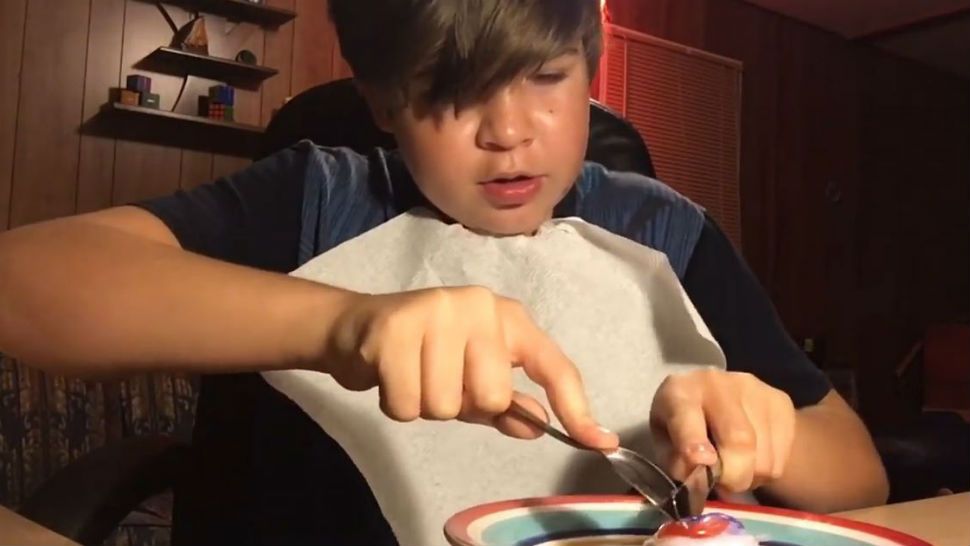
    Let's talk about another popular challenge, the challenge you have ALL been waiting for.....the #TidePodChallenge. For some odd reason, people won't necessarily consider the fact that eating laundry detergent could kill you. Have you ever heard of clout? Well, these people do dumb and harmful social media challenges just for CLOUT. No one is sure how this challenge started, but the point is that there are people in our world that will do anything to get views on social media. Now I have a question for whoever is reading this (Hi Dr.Vrooman), do you think that there is a problem with social media challenges? Of course there are different levels of severity for each challenge, but does not doing a less severe social media challenge still create a high severe social media challenge? Obviously it is sad that there are people out in the world that participate in these challenges for fame, but the world is still giving these people attention which could be part of the problem as well. 

Teens are posing with detergent packs in their mouths in 'Tide Pod Challenge '


   Sadly, we all know that in today's society anyone will do absolutely anything they see on social media. Although most of the challenges that are created are very silly and dumb, they can actually be very entertaining. There are a few social media challenges that are fun, inclusive - and maybe if it is a workout challenge, good for you. With that being said, no matter what challenge you or someone else has created, just for heaven's sake make sure you don't send yourself to the hospital! #TidePodChallenge!


Final Paper, Part 2: Literature Review

hdstsytsdystsutsyt Literature Review Social platform reddit can tell us a lot about the impacts pandemic. For example, Hossu and Pardee ( 20...