Join us in our public Facebook Group, where we will discuss these issues.

Saturday, April 10, 2021

Does Drama Trend?

    Yes. Saved you from reading the rest of this article I suppose. But for real though, let's dive a bit deeper into this and really think about what kind of drama circulates on social media. We already know how polarized the posts and comments can be from political conversations on the internet and those typically just end up with people being spiteful rather than productive. While this certainly has been amplified by social media, being cutthroat about your political beliefs is not exactly new. So what else trends drama-wise? Influencers. Cancel culture and accountability culture seem to have increased influencer popularity, but of course, this kind of publicity is usually harmful to the influencer's careers rather than actually boosting their career. 

    More of a personal note than anything, but I think accountability culture is good as it makes people take responsibility for their past actions, but also does not go to the extreme ends of trying to delete a person off the platform if they have grown past it. Don't get me wrong, there are cancelable topics that we should not tolerate whatsoever, but there are also ways that people can grow as a person from their past mistakes. The internet is not as forgiving it seems and unless you have been a perfect human being all your life, someone will find something in your past to cancel you if you are an influencer on social media. We might not always recognize the impact of our digital footprint, but the content that you post to your social media can at any given moment come to haunt you should someone actively want to find something against you, especially if you are an influencer where people have access to a plethora of Tweets and other posts. I mention Tweets specifically because it seems as though Twitter has turned into the platform to specifically deal with this type of drama against influencers. As the Reddit user, u/tehsmittenkitten comments in the subreddit r/nosurf, "I deleted it [Twitter] months ago and never felt better. I would wake up and see something on there that would upset and it ruined my whole day. That’s when I realized I needed to change. Twitter is toxic because it’s much harder to control your feed compared to Reddit and Instagram (which is also toxic). It also feeds off drama because that’s what gets you 'clout'. I will never go back to Twitter even if it was funny at times, the bad just out weighs the good. Not to mention what a time consumer it was!" 


   We can see that drama, specifically from influencers, tends to trend the most on platforms on Twitter and it seems as though there are subgroups forming from this weird trend. People who defend and "stan" the influencer in question, the people who dislike the influencer and want them off the platform, people who cover the drama, and people who are actively annoyed by this and want nothing to do with the drama. The internet drama will circulate regardless on social media though and there truly is no way of avoiding it entirely. However, Twitter does seem to host more of this dramatic content and other influencers will usually highlight this drama and talk about it as if it were news (hello Keemstar) or in podcast-style (hello H3H3) or even a simple Twitter post and comment reading (hello Bowblax). Influencer drama, in a basic sense, can be broken down as follows: Two budding parties fight on a platform on Twitter, people join in on the conversation to make it trending, a "drama" channel covers their fight, more people join in and thus make the drama trending even more than it was before,, some sort of resolution/stalemate occurs while people who were not active in the conversation get annoyed at petty influencer drama.


     Accusations and hate spread like wildfire it seems when it comes to influencers and drama. The strange phenomenon that occurs is that this drama, as harsh and publicly as it was in the beginning, seems to have a short lifespan... until it doesn't. Let me clarify that for a bit by comparing two drama scenarios from the Bowblax channel. The fight between Trisha Paytas and Nikita Dragun lasted approximately 7 hours on Twitter and then it sort of fizzled out. That's not to say that it is not still being talked about here and there, but the majority of the conversation happened during that time frame and then it seemed to almost abruptly stop. The James Charles one however seems to have an exponential rate of being talked about as now news outlets and bigger media channels are talking about the situation more than ever. This is what I meant by most of the drama seems to have a short lifespan until it doesn't for bigger controversies and influencers like James Charles. 

     Whatever your take might be on Influencer drama, you cannot deny that these stories do trend on platforms like Twitter and YouTube. There are many people who thrive on this content and many who are annoyed and have actually stayed off Twitter to avoid it. One thing is for certain, as long as influencers exist, the drama will seem to follow them in some shape or form and it is not going away. Better to delete all social media while you still can before you get sucked into the drama and question what you are doing with your life as you mindlessly scroll through subtweets based off of influencer drama.

The pros and cons of protest devised through social media

    We learned this week about the pros and cons of the protests of the BLM movement and the #Metoo movement. These are both great movements with great intentions, but sadly they do have some downfalls to them both. We see downfalls in the way that they are interpreted by the actions through protest. Mostly everyone knows that black lives matter and can agree on that. Protests are needed to make a statement and show when change is needed. Protests shouldn't be used to tear others down and destroy lives, businesses, and buildings. In my opinion, this isn't how you are going to get someone to agree with your movement. 

    There are many pros of gathering a group of protestors through social media. The easiest part of devising a protest through social media is garnering a following. It's simple to make your message clear through social media and find people that agree with your message. You can create a social media page that has all of the values your organization represents, so know one interprets your message the wrong way. If someone thinks that your organization represents something different than what they perceive, then there could be confusion throughout your movement. Another pro of gathering a group of protesters through social media is that it is much easier to get your supporters together in one place at the same time. This makes it easier to get a larger group to show that your movement has numbers, and people are behind your message. You can post pictures on your social media page of the protest to show support of your message to garner new members. Pulling out ads for your Facebook group so that the friends of your fans can see the group helps as well, and this can attract new members. As you can see, there are a lot of pros when it comes to gathering protesters through social media.  

    While there are pros to gathering protesters through social media, there are also a couple of cons. It is easy to face backlash through social media. Everyone always has something to say, and everyone seems to be a critic nowadays. If you are the type of group with the mindset of " you're either with me or against me" then you are going to have many people trying to rile you up to make your organization or movement look bad. You have to be careful what your leaders are doing or saying on social media, because one slip up can cause a lot of harm to a movement. If there is a protest set up through your group and people from another group start causing destruction and harm, it is important you disaffiliate yourself from them as fast as you can. If you don't, people will start to slowly distance themselves from the movement because they don't want to associate themselves with that. Another con of gathering protesters through social media is that people may say they are with your movement when they really aren't. You may seem like you have enough protesters riding with your movement, when in reality no one wants to be in public representing it. 

    In conclusion, there are most definitely pros and cons to gathering protesters through social media. It's how you deal with them which is the most important part. I think that before an organization tries to gather protesters through social media, they should have a plan. They should have a plan for of the protest goes good or bad. There are always going to be bad apples in a movement, and organizations need to distance themselves from those to not deter from the main message. If the organization doesn't distance themselves from those bad apples, then it will hurt the organization and the message. This is what hurt the BLM movement the most. Encouraging violence to get the message out there actually hurt what was supposed to be a great movement and message. There are always going to be people who criticize your movement, but it's imperative to be open to criticism to expand your audience. 


Friday, April 9, 2021

#TidePodChallenge

 Hi everyone, it's me AGAIN!

    Do you ever wonder what sparks someone's mind into doing silly social media challenges, and by silly I mean challenges like - the ice bucket challenge or even challenges like standing in the mirror with someone else and turning the light of to then you have both swapped clothes - aka #FlipTheSwitch. It's viral challenges like these that are somehow so fascinating to us. 

    Today's society is so gullible to do anything trendy. TikTok for example is the new creator in developing random challenges for kids and even adults. The simple sixty second videos are easy to follow and quick to learn. You will see a lot and I mean....A LOT of kids, teens, and even adults doing TikTok dances publicly (how embarrassing - I know). The reason so many social media challenges become so popular and successful is because they are so easy to follow. Especially when you create a hashtag, like from my example above - #FlipTheSwitch - these challenges will somehow pop up on your "for you page" (#fyp) because they are what is trending at the moment. Most of the challenges are supposed to be fun and inclusive for everyone, but in my opinion most of them are just REALLY silly. Let's not even get me started on the thirty day song challenge (LIKE WHY), which was where people would post a song of their choosing each day for ~thirty days~. On all of your social media platforms, usually things of your likes and interest will pop up even if you are not following them. 

    Social media challenges are what cures boredom for society nowadays, they have especially carried us through the Coronavirus pandemic. Creating social media challenges has been a way for many people to creatively pass the time during the pandemic. Challenges are so popular now that even Instagram added a "challenge sticker" for people to put-on their stories to make it easier for people to follow the challenges (this is similar to a hashtag, but more creative). There are many different challenges but there are challenges that can bring the family together, challenges to create art, and like I said above - challenges like dance routines. The choreographed dance routines on TikTok are annoyingly popular. Honestly, if you were at any public place and you looked around, I am almost positive you would see one person filming themselves dancing with their phone propped up on a wall. There are literally people who have gotten famous and get PAID for doing these dancing (that is crazy to me). Can you just imagine dancing for your own phone for just sixty second and then getting paid for it? 

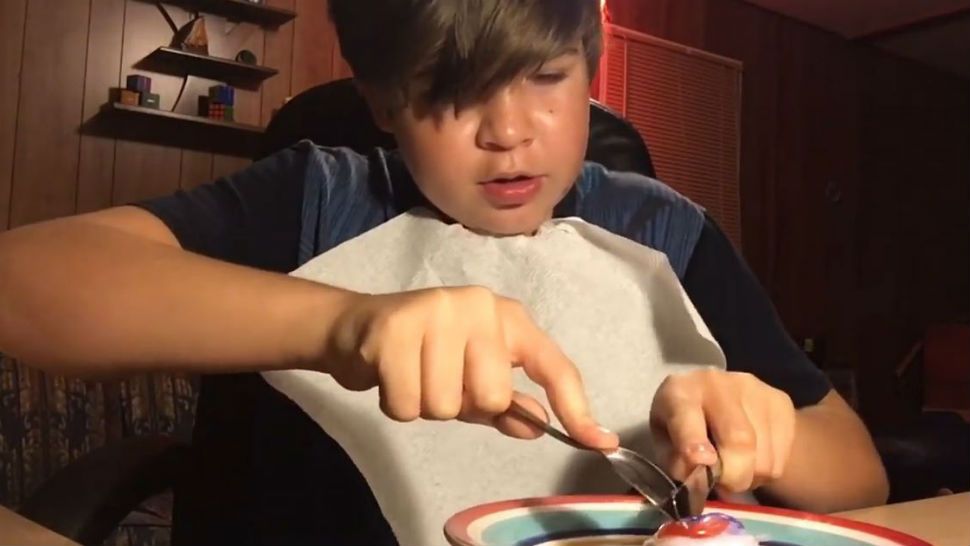
    Let's talk about another popular challenge, the challenge you have ALL been waiting for.....the #TidePodChallenge. For some odd reason, people won't necessarily consider the fact that eating laundry detergent could kill you. Have you ever heard of clout? Well, these people do dumb and harmful social media challenges just for CLOUT. No one is sure how this challenge started, but the point is that there are people in our world that will do anything to get views on social media. Now I have a question for whoever is reading this (Hi Dr.Vrooman), do you think that there is a problem with social media challenges? Of course there are different levels of severity for each challenge, but does not doing a less severe social media challenge still create a high severe social media challenge? Obviously it is sad that there are people out in the world that participate in these challenges for fame, but the world is still giving these people attention which could be part of the problem as well. 

Teens are posing with detergent packs in their mouths in 'Tide Pod Challenge '


   Sadly, we all know that in today's society anyone will do absolutely anything they see on social media. Although most of the challenges that are created are very silly and dumb, they can actually be very entertaining. There are a few social media challenges that are fun, inclusive - and maybe if it is a workout challenge, good for you. With that being said, no matter what challenge you or someone else has created, just for heaven's sake make sure you don't send yourself to the hospital! #TidePodChallenge!


Monday, March 29, 2021

Phoney Parental Power?

     I'm sure I don't have to repeat the phrase "you are on your phone too much, back in my day [insert what your parents used to do here] because you probably have heard it a bit too much by now. They aren't completely wrong, you probably are on your phone way too much for your own good. However, could our parents learn this own lesson for themselves as well? When we hear about overusing phone usage, it is easy to think about teenagers and younger adolescents who are using it too much that parents are not ever the topic of discussion for phone usage. While parents may have a more practical use for phone usages like work, emails, and calls, they cannot avoid the addictive nature of mindlessly scrolling through their phones and catching up on the latest family gossip. 

    So we know that phones are not always the best piece of technology, especially considering how addictive their general nature is because of our underlying fear of boredom. In Dr. Vrooman's Social Media & Society class, we were asked about how much control we believe to have over our phones where we could genuinely give them up and not use them. The highest percentage was 40%... This means that the "strongest" person who has the most self-control over their phone in the classroom has about 40% control over their phone while the remaining 60 means they give in to the temptation of their phone. That's actually quite sad if you think about it and many of us are probably around that mark if you are being honest with each other. Though, is it really all that surprising? I mean, the stereotype of phone usage is mainly targeted at younger adults and teens after all so this seems to prove that theory to be somewhat true for our sample size of Vrooman's classroom at the very least. The problem is that if we are focused on just one group of people and not the rest of the population and how phone usage, we might not be able to fully adjust our society to the addictive nature of our phones.


    In order to better think about this, if you are in the vicinity of your parents or you are living with someone who is older than you, casually see how long they are on their phone and what exactly they are doing. We know the classic, "kids these days" phrase but if you take a look at how much your parents and elders use their phones too, you would probably be surprised. I have often told my parents that they use their phones a lot more than I do as I see them sitting on the couch usually going through Facebook. According to the NY Post, parents actually only give about 24 minutes more attention to their kids than they do to their phones on average. I would hypothesize that parents and kids actually use phones for about the same amount of time, just for different situations which leads to the difference that we know today between generations.
    
    Whether we like it or not, phones are almost necessary and are often seen as a commodity, especially within countries that rely on technology more than ever for work and communication. Not to mention that this has been increased since the pandemic happened. This explains why our parents and elders use the phone more frequently it seems because they are attached to it as they wait for that call they are expecting from work or for that email they need to know what the next steps are to complete a certain goal for their job. When you feel as though you are inseparable from your phone, it makes it easier to get addicted to different websites and games in order to pass time as you are waiting for your job to respond or for that one family member to finally send that message through Messenger on Facebook. So in reality, phones do help adults out with important aspects of their life, but the addictive grasp of cellphones also gets stronger the more you use them as one might assume. This is fairly evident with my parents as just the other day when we were at Outback, my father kept getting calls and emails from his work, even though he was supposed to be off and enjoying time away from it to destress while my mom practically lives off Facebook as she scrolls through it to keep up her social obligation with her family and friends. 

    All of this is not to try and derail from the fact that younger generations use technology and their cellphones a lot as well. As mentioned before, I was really surprised to find out that about half of my time had been taken up by my phone but also not surprised at the same time considering that is all I have really been doing recently. 
We know that everyone can get mentally addicted to their phone, so that is not necessarily the goal of what I am trying to address here. The issue I want to address here is that we should be analyzing the addictive properties of our phones across the board and see how what kind of effect it has on different age groups. We often like to think that we are masters over our devices, that we could give them up at any given time should we want to. But that 40% mentioned earlier and that little 24 minutes extra of attention given to children by parents paint a different picture for us. Does this mean we are fully powerless to our phones? Not necessarily. You can start small with challenges that try to actively gauge your mind away from your phone like trying to do the challenges in Manoush Zomorodi's book, Bored and Brilliant as a start to try and see what a few days of less phone usage are like and see if you can take baby steps to essentially untrain your mind from phone usage. However, we should also not be afraid of our phones either as we know we need regardless of how we feel. It is a matter of gaining control and power over our phones rather our phones to have control and power over us is what we must face together as a collective society.

Saturday, March 27, 2021

Attention Rehab: How Attention is Trainable like a Muscle

 Is attention a muscle we can train?

In our class we debated whether attention is something that fluctuates much like our muscle strength or not. But before we get into that deeper thought, lets ask some simpler questions.

Everyone can agree that this is the digital age, and if electronic devices were to simultaneously shut down our society would fall into chaos, but how much time are we using our cell phones to benefit and grow our society versus filling in our gaps of boredom?

After being asked (more so told) to track our phone usage over a 24-hour period for our class, I was a little shell shocked by my own usage. I knew that I could probably stray away from mindless scrolling on Instagram or Facebook, but I didn’t know that I spent upwards of 5+ hours using these platforms! 

I felt like I could have done so many more tasks if I had just put my phone down, but even then, if you are focusing on a task and look at your phone notifications, it takes you up to 23+ minutes to refocus completely! That’s insane!

One study done by Florida State University suggests that merely receiving a push notification is as distracting as responding to a text message or a phone call. The study asked more than 150 students to complete a test of sustained attentional performance. For that test, subjects are shown a series of single digits on a screen. A new digit is displayed about every second. Students are supposed to tap the keyboard every time the digit changes unless the new digit is 3. Everyone took the test twice: the first time, they did it uninterrupted by their devices; the second time, assistants placed calls or texts to some of the students’ phones. They found that performance on the assessment suffered if the student received ANY kind of audible notification. That is, every kind of phone distraction was equally destructive to their performance: An irruptive ping distracted people just as much as a shrill, sustained ring tone. It didn’t matter, too, if a student ignored the text or didn’t answer the phone: If they got a notification, and knew they got it, their test performance suffered.

So, subconsciously its not our fault that we get distracted, we’ve merely been trained to interact with notifications, but through recognizing our habits and practicing good habits we could break the cycle!

Now let’s get back to my first question, is attention something we can train? I believe so, and I have personally experienced a retraining of my attention through sports.

Dr. Vroomann, our professor, made the connection of attention related to fast pace sports like volleyball and basketball. As soon as he mentioned that I had a lightbulb moment! I used to play one of the fastest positions in the game, one that required me to think two steps ahead of the other team, but once I got to college, I was moved to a position that required more time for thinking and planning. I was moving slower than usual, and my body and mind wasn’t ready for that change. I found myself overthinking while I was playing and I wasn’t preforming very well, but over time I developed a new attention span and got better. But I found myself also getting bored with this position, I felt lackadaisical with this position, but this was an opportunity I didn’t recognize until my second year playing this position.

Original picture of myself playing for Texas Lutheran University
#25, Cailey Young
Boredom is an amazing opportunity to expand your creative mind! In her book Bored and Brilliant: How Spacing Out Can Unlock Your Most Productive and Creative Self, Manoush Zomorodi. She interviewed Dr. Sandi Mann, a psychologist, and asked exactly what happens when you get bored that ignites your imagination. “When we're bored, we're searching for something to stimulate us that we can't find in our immediate surroundings.” In other words, our brain is forced into finding something to stimulate itself like daydreaming, creating a new game, or creating art, etc.

For me and my sport, my boredom was solved by playing the position with my own twist. I made the setter, or quarterback for easy comparison, to run a faster play for me. The position I’m in is slow so the defense has time to set up on me, but if I sped up the plays, I had more opportunity to score! My boredom ended up being a huge asset to my team and were one of the most competitive teams in our conference because of it!

So, yes, our attention can be compared to a muscle, and although it has many distractions from its main workout, it can be stimulated and exercised through boredom if we allow it to be bored. So put the phone away, daydream and get creative! It can be really refreshing when you do.


A look into our lives and cellphone use.

By now, its quite obvious that our phone has become a staple to our daily livelihoods. Many would much rather lose their car keys or purse over their phone, and at first glance this would obviously seem like its because it serves as their main communicator between them and their loved ones, but in reality the truth is a lot more sinister. The dopamine created by our device usage makes it simply inescapable from the grasp of advertational pull that they create for each personal user. When 80% of the population uses their phone within the first 15 minutes of their morning, its hard to argue that they haven't become part of our daily routine. What could one have missed for the 8 hours they were disconnected from the world? We're not sure. but we are determined to find out. 

https://investorplace.com/2020/08/the-screen-time-surge-may-not-be-healthy-but-it-is-producing-profits/

After viewing the graph, although it only reaches 2018 it's hard to assume that the bar has gone down. With the presentation of COVID-19 into our daily lives, screen time has risen to at least 5 hours and as we transfer slowly into our common way of life, one may notice an urge that may have not been there as often as it was now. What's happening on Snapchat? Your middle school friend got into relationship? The 'best friend' that stabbed you in the back is posting about the importance of loyalty? Although no previous care may have been placed on our phones, the more personalized and improved feedback we get from these notifications, the more it makes it harder for one to stay away from their device and one may not think much of this to consider it as an issue but consider the following:
    -This averages out to approx. 30 hours of social media use weekly
            - 45 Minutes a day for a month is enough to go from not knowing anything to being "Pretty good"

If the Average American used half of their time on social media attempting to learn something new, they could achieve a skill in a matter of 2 weeks. This is why many of us find it a challenge to let go of our device, but many social researchers are trying to find methods to get us to look away from our screen such as deleting apps, not looking at it while in motion or simply looking at life in a different light. Although the appreciation towards these authors is due for their attempt to get us away from our phones the truth is, just like any addiction, it just makes us crave our phone even more when we don't find the sweet, sweet release of dopamine from attempting at drawing the previous room one was in. 

https://www.le-hom.art/portfolio/big-brother-is-watching-you    
Although many students place tape on their laptop to "not allow their FBI agent to look at them", using their device in general for any social connection is a hypocritical move from a privacy perspective since any data used can be tracked, measured, watched, monitored, and recorded. Whether we like it or not, privacy is at a all time low and that feeling of constantly feeling watched isn't unwarranted. Prior to our generation, technology was seen as some evil thing that was bound to betray the human race, kill everyone or as something that would forever revolutionize society due to its simplistic nature. 
Well both were not wrong to say the least, but the true enemy with this tool is oneself. Social Media pages don't come with warning labels on the direct effects of social media on the conscious mind but as time goes on and data can be formulated we will serve as the Lab Rats who depended on technology, but at the same time we could also continue to fall towards the progressive nature of technology, which could ironically result in the detriment of the strands our personal and social culture. 
We are at a stage in society in which we have so many different influencers to the point that our free will seems to be more controlled than we can imagine. The argument of how ethical are to some of the users often lands on people who don't know how cookies and algorithms. The truth is that many of us believe we choose to view our media and although we do command our cellular device to do specific things, it's those little widgets that take you for a ride that will probably plague you for the rest of your life (unless there's some sort of mutual assured destruction to save you).

Friday, March 26, 2021

Learn How to Use Technology, Karen!

Hi everyone!!!

    Today I am going to be writing about kinda a controversial topic, which is cell phone usage. Something I am curious to know more about is what the majority of people think about the overuse of cell phones. Some questions I will be asking throughout my post are going to be: "Do you think cell phone overuse is a thing?, "Do only old people think we use our cell phones too much?", and maybe even "Do you use your cell phone too much?". Now all I am asking is as you follow along, be honest with yourself - OK GO!

    In today's society, cell phones are obviously very popular. Smartphones became extremely popular around 2007. I was about seven years old when the first true smartphone came out and I was twelve years old when I received my first smartphone (CRAZYYY). Before my smartphone, I did have a flip phone - which was the pink Razor (of course!!!) and a blue Blackberry. When you are young, phones are SO COOL and I am not exactly sure why but they just made you feel so grown up and on top of the world. However, when I secured my first iPhone 3 that was a complete other level of feeling AWESOMENESS. The amount of time I spent on my phone as a twelve year old was probably not healthy at all. With that being said, I will answer my first question which was, "Do you think cell phone overuse is a thing?" - my answer to this will obviously be a big YES. I remember thinking that if I was not constantly checking my social media or seeing who texted me, that I was going to miss out on something important or cool. Whis is funny because this is exactly what created my FOMO (fear of missing out - this is a real thing)!!!

    For my next question - I threw this one in here for ALLL the youngsters out there, "Do only old people think we use our cell phones too much?". Now, nothing irritates me more than an older person commenting on how often I use my devices - my only thought process when they are saying something to me is "Sorry you don't know how to use technology, Karen!". Sadly, I do kinda agree that the older generation does believe this of the younger generation, but that is not to say that the younger generation does not believe the same thing. I have noticed that society has completely transformed into promoting more mental health in everyone's lives, which is awesome. But something our generation and society itself has recognized is how much we use social media and how mentally draining it can be. Technology is only going to grow bigger, better, and faster - but as long as we are able to control ourselves then there really should be no such thing as "cell phone overuse". 


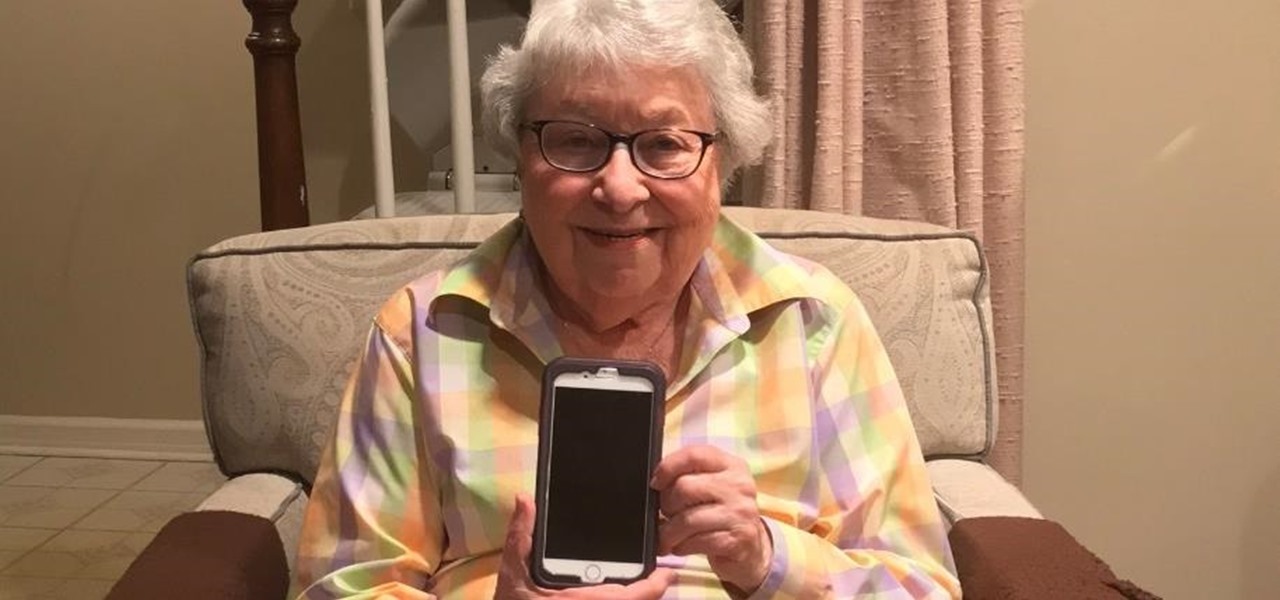
How to Set Up Grandma's First iPhone (A Guide for Newbie iOS Users) « iOS &  iPhone :: Gadget Hacks


    As technology continues to evolve, so will your social media and the amount of smart products you buy. So my last question is asking more of a direct question for YOU (whoever is reading this - A.K.A Dr. Vrooman), "Do you use your cell phone too much?". Personally, I do use my cell phone a lot - it is that ONE thing that I take everywhere and I would definitely have a complete meltdown if I lost it. For one of our class assignments we had to do a couple challenges to limit our phone use. Most smartphones have the ability to track your daily and weekly screen time. During my challenge, one of the first steps was tracking my screen time, which the majority of it was social media. As I continue each challenge, I will have to agree and honestly say- yes I do use my phone a little more than I would like. But I am a firm believer that if you want to change something then you can do it yourself, or in other words - your actions are based on the decisions you choose. 

    Technology is never going to go away, and as much as all the grandma's and grandpa's want it to - it will only continue to grow. I am not writing this post to tell you what to do or what is right and wrong, I am just asking you to be honest with yourself and get you thinking about whether or not YOU spend too much time on your phone. If you are someone who really hates the fact that you use so much screen time, change that about yourself. If you are someone who really does not care and wants to continue to use your phone every second of your life, go for it. So to all you girls, guys, grandpas, and grandmas - live life to the fullest, phone and ALL ! #teamiPhone!


Final Paper, Part 2: Literature Review

hdstsytsdystsutsyt Literature Review Social platform reddit can tell us a lot about the impacts pandemic. For example, Hossu and Pardee ( 20...