Join us in our public Facebook Group, where we will discuss these issues.

Saturday, January 25, 2020

Going through it

Going Through it 

By: Brent Hitchcock


Whenever I made the transition from High school to college I believed that I had changed as a person at the snap of my fingers. I believed that just because I wasn't in high school anymore I was a different type of person. That being in college meant that I was now A grow man with my own self interests.


Well to tell you the truth that was all just a lie. It was not that easy and that simple to just think I could change over night. Soon enough the college life would hit me with what reality was all about and one of the biggest things that punched me right between my legs was the reality of being responsible for my time, my actions, and my words. In high school you're protected by this safety net that your parents cast out over you to protect you from messing up your life before it even gets started.

 Well when you get to college that safety net gets put away and you are set to swim the oceans of life on your own. you learn how to plan, organize, and stay ahead so that you don't get sent back home and become of your local "peaked in high school football jock buddies". You learn who to trust and who to forget, you learn who will be there for you and who will cast you to the side if it doesn't work for their self interests.

One of my biggest flaws was knowing what my actual self identity was, I didn't ever take the time to really think about what my values where and what I stood for as a young college student trying to make a future for himself. I've had to learn all my lessons about finding my true identity the hard way. Trust me on this one my freshman and sophomore year of college have not been a cake walk, and I'm not just talking about school I'm talking about my relationships with people I thought I could trust to girls I thought I hit the jackpot with. I've learned that there is a lot of evil people in this world and they will manipulate you into something your not just to see you fail for their self pleasure.

These past two semesters of college I would call "Brent's growing stages for life". At one time I thought I knew everything about myself. But recently I've realized that the person I have been was not truly me at all. I was just trying to fit into my surroundings and letting people tell me who I could and couldn't be. It derailed me to being someone who had polar opposite identities.
https://docs.google.com/document/d/1wJEEVdpVMuM1UYHPm5-hiY7slNfghnM4CLX7Y4M1JCQ/edit
Over this past break I completely focused on myself in trying to find out who I truly was and came to a bunch of harsh realizations. But in all honesty it's been the best thing that could have happened to me. Listening to Professor Vrooman talk about mead and true identity with the differences between being a "me" or an "I" person helped me paint my own picture of who I was and wanted to become.

In my opinion I built myself up as a "me" person in the early stages of college.  I was built out of what others wanted me to be. Whatever helped me fit in more is what I did to get along with the general population of people who I considered cool. But. coming into this semester I've transitioned more into a "I" person. Who do I want to be. What do I want to become, who am I going to let tell me what I can and cannot do? No one. I'm my own person and if I want what I desire in life then I need to take a path of my own to be the man I want to be. To have a self identity not a clump of false opinions shaped into a person to fit others satisfaction.

Vrooman's class last week helped me sort of shape that idea more clearly in my head when he asked one by own how much of ourselves was truly our own identity and not somebody else's. Literally only two people gave him actual answers to the question... I myself didn't say anything I sort of just sat their puzzled at the question kicking myself that I never asked myself the same thing. It's kind of weird because usually I'm the observant person in most social settings but being in Vroomans class and having him point out the smallest of details about our appearances and  how they relate to personal things that could be going on behind closed doors is scary but also very amusing to listen to.
His discussions about mead have helped me figure out what the differences between being a "me or an "I" person truly are when it comes to building self identity.


https://docs.google.com/document/d/18XihROKao7cKmdtMpWAgFsYnUzCHM4I5-gnOgRfgwds/edit


Luka Magnotta: Classic Case of The Looking-glass Self


Dont F**K with cats: The internet killer, is a new documentary that is catching the attention of many Netflix users. I will admit it took me a few weeks to gain the courage to click on the film, but it was worth it. The documentary follows the mind of Luka Magnotta during his last years of freedom. Arguable you could say that his last two years weren't as free as he might want. Members of a Facebook group followed Magnotta's journey and mind for years prior to his arrest, and Luka was aware of the publicity he was gaining on the social media platforms, the publicity was possibly factor in his actions.

Countless amounts of civilians turned into Facebook FBI detectives communicating through a private group. The documentary focuses on specifically two individuals in the group, John Green and Deanna Thompson who used the alias "Baudi Moovan". The documentary uses the new FBI agents as a well the tell the story of Luka Magnotta.

The Facebook group embarked on a man hunt that ended with results they were hoping for but, the group was still left feeling unsatisfied and wondering if they were the reason his narcissism grew to the hight it did and if the attention that gave allowed for the actions Luka Eventually took on another human being, Jun Lin.


Luka achieved fame by creating "movies" that displayed his twisted actions, people from all over watched the killing videos and reacted, just as Luka wanted. Even the individuals in the comment section leaving messages filled with hate gave Luka the attention he craved. He was displaying who he was for everyone to see.

Who are we? We can change our appearance, something Luka did a lot, we can also change our inner personality, only in minor attempts. These changes come from feedback, they come from the socialization and the people you interact with on a daily basis.

Who we are is actually a product of our socialization, the groups we hang around with and the individuals we chose to have conversations with, while all this can be simple life interactions it also creates who you are as a person. Even the interactions we have online help create our personalities. Our environment creates our character weather that be over social media or person to person communication. We don't know much about the interaction Luka had with individuals during his daily life. But we do know that Luka was aware of the conversation surrounding who the internet thought he was. Thousands of comments flooded the private Facebook group as well as the videos he posted. The comments on the post throughout labels like, monster, killer, maniac and more. If Meads ideas on the self and how our personality is built is correct than the comments and feedback Luka received from his videos could have prompted his decision to kill Jun Lin. Lets Discuss.

George Hubert Mead teaches the concept of the "looking-glass self" that is further developed by Charles Cooley. Which is the idea that who we are is created from the interactions we have with other individuals and society. The reaction of individuals surrounding you don't necessarily build characteristics like narcissism among other things (in Lukas case) but I believe it can fuel it, sometimes people are fueling others without even realizing. One major discussion in the documentary covers the idea that the Facebook page which helped put an end to Luka Magnotta also created reason for his actions.

Cooley explains the looking glass self as a way to manipulate the responses of others. Luka was aware of the responses from the individuals hunting him, he loved the fame, he loved the game. He crafting others option of him to create the image he desired, the image of being known whether it was for good or bad. Similar to Meads ideas Lukas actions and narcism was and is a never-ending cycle.

The "self", the "I", and the "me" (Another adaptation of Meads ideas by Cooley) dive a bit deeper into the ideas above by explaining what creates these phenomenons. The "self" is a social process, created by interaction through social occasions and even social media. Through development of our selves we gain the ability to process our own thoughts and actions and well as others actions. This comes after the understanding of the "Me" and the "I".

The "me" is the part of you that has been created by others, there opinion or just what you have adapted from others actions. (This could even be as simple as adapting a mannerism from someone like your significant other) The characteristics you adapt even your beliefs come from what you see, read, and are persuaded towards when talking to peers or reading different post on social media. The "I" is the part of you that is is authentically you. The part that allows you to make your own decisions on what is happening and who you are. Mead Argues that we barley have an "I".

What exactly does this mean for Luka Magnotta's case? We can conclude that the comments on his videos didn't start the killing of animals because he was posting videos before he started to gain fame. But the comments on the videos where he is killing cats could have contributed to the killing of Jun Lin. When it comes to a case as serious and extreme as Lukas is hard to think that the "I" part of him would be scarce. Unless of course the internet makes Serial killers? I don't think that is the case.

The case is something closer to Luka Magnotta crafting a new meaning to symbolic interaction through the use of society.

I think that the internet and the publicity around Luka and his actions gave attention to Lukas overall sense of self. Luka has a issue with narcism, he was constantly posting videos of himself that were just a collage of pictures from his vacations around the world, hidden as his attempt to say on the move and to stay our of sight. Aside from he videos of picture collages he was on multiple porn sights that allowed for him to get feedback that was praising his looks. Comments talked about how "sexy" and "hot" Luka is. The comments helped create the "me" part, created by society and then built onto hi "I". Aka the narcism.

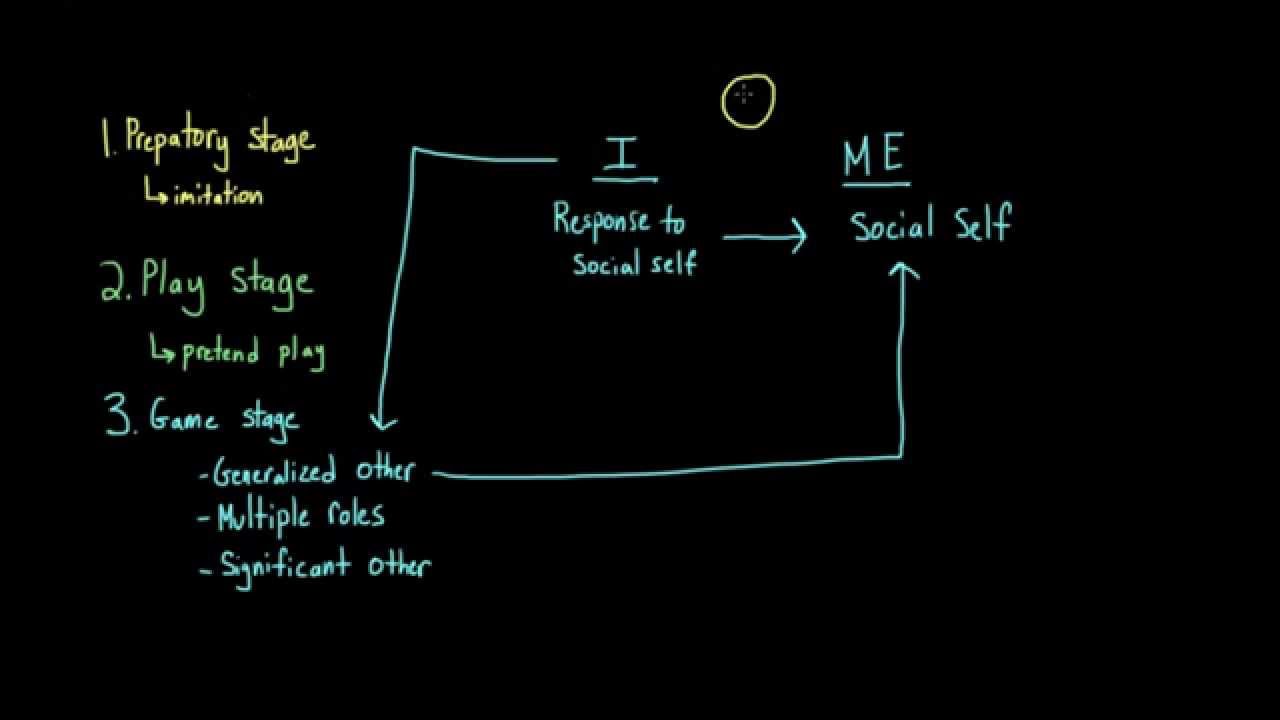
Mead also discusses the 3 stage rule. The 3 stages are: The preparatory stage, the play stage and the game stage. For a quick summary, the preparatory stage is when you are a young child in the beginning development stages of your life, you act as a sponge, taking in loads of information.. good or bad I might add. The play stage is where you take on the roles of others, like a kid playing fire fighter. Finally, the game stage is where you are aware of rules and actions, its like the final development.

Picture from YouTube video by Brooke Miller

I think that Luka is stuck in the play stage, where he is talking on roles of others. The documentary was focused on the hidden messages in the movies Luka created, like the songs he used and what he used as a murder weapon.

In the killing of Jun Lin and onwards Luka took on an entire role from a movie he loved as a kid, Basic Instinct. The set up of Jun Lins murder was built to look just like the murder in the film. The murder weapon resembled the one in the film. Luka so was into the details that he painted a screwdriver to look like an ice pick Even when Luka was arrested and question he's acted the same as the murderer in the film, doing so by crossing his legs and asking for a cigaret. I have yet to figure out what this means for Luka and the rest of society, the potential that Luka could have been stuck in the play stage makes him vulnerable to society's reaction. It leaves me wonder if the hate he received and the attention he got actually did contribute to the murder of Jun Lin. Would that make all of us murders? 

If that is the case I am still contributing to the issue as I write this blog, all the views from the documentary are contributing. The people who commented on his post and created Facebook groups are helping contribute. Every single view he received on his videos every like and dislike, every whisper helped create an actual monster. Even you the reader are now contributing to this issue. So, what do we do now?


Pham Phriday: It's All About "Me"

Finding Haley
My freshman year of college, I spent a good amount of my free time browsing the internet. One day while I was sucked into the blackhole that is YouTube, I was introduced to, one of my favorite YouTubers, Haley Pham. She was a quirky, relatable teenage girl from Austin, Texas that loved to document her competitive dancing, do silly things with her friends, review makeup, and talk about her interest in fashion. 
On January 31, 2018, she posted a video titled: testing stripper life hacks for shaving my bikini line, which would end up becoming her most watched video to date, sitting at ten million views. Not long after the video was posted, she started to receive more and more views as well as monetization on her videos. As the views started pouring in, more and more people of different backgrounds began to watch her videos and subscribe to her channel. Her increased following began to create problems with students, teachers, and faculty at school so she decided to pull out of public school and complete high school online. This gave Pham more time to focus on her content and videos that she wanted to create for her channel. The increase in content allowed her to purchase better videography equipment and experiment with different types of videos that would perform better than others. She slowly started to drift away from videos that were typical for her channel and into videos that would increase views and income. She began to lose herself in order to please others. But when you lose track of what you want, it’s only a matter of time before you crash. Pham would soon find this out the hard way. 
Not Letting It Go
In the fall of 2019, Pham posted a video explaining all the mistakes that she made while on vacation with her boyfriend and mother in Europe. She described her time in Santorini, Greece, and made a comment that Santorini wasn’t a good place to go to, there’s nothing to do there, and that Greece’s economy is not fit for tourism. She received tons of backlash for the comments and a few days later posted an apology video on her vlog channel, Haley Pham Vlogs, in order to try to right her wrong. However, the damage had already been done. Since then both of the videos have been deleted, but still months later after the incident, people have not easily forgotten what she said. Whenever she posts a video on TikTok she receives numerous comments from trolls saying things like: How’s Greece? 
After the travel video was posted and deleted, she continued to create her typical clickbaity, influencer-type content and even proceeded to launch her own clothing company, Retro Reprise. 
What Wasn't Being Shown
Just a few days before her nineteenth birthday on December 2, 2019, Pham posted a video to her main channel titled: something needs to change. In the video she gives her side of the story to the past few years of her life. She describes how right when her YouTube channel started picking up her parents were in the middle of getting a divorce and her mom also lost her job. Her YouTube revenue allowed her to support her mom and herself during this difficult time. She also stated in the video that for a while now she has not felt like she has been herself in her content and that she hasn’t been vulnerable with her viewers. Since that video, her recent releases have had more resemblance to her older videos in terms of the topics she has chosen. She seems more relaxed during the videos because she’s being less of a performer and more of herself. Also she recently released a new podcast, Call Me Candid, with her friend and small YouTuber, All Things Lily Ann, which I am very excited to start listening to. 
Connecting to Mead
Haley Pham’s personal journey and the way she documented it is a great example of Mead’s concept of the “I” and “me”. When Pham began to gain subscribers, her product began to change as well. She was adapting to what she believed people wanted to see and what she thought they expected her to do and act like, appealing to her “me”. But in reality she had just gotten into her own head. It obviously wasn’t what people wanted to see because as her videos started to change so did her comment section. She went from people praising her videos to calling her out for not being herself and receiving hate. Her obsession with what others thought about her actually made her change. When she realized what she had done and that she had lost her “I” in the process, is when she decided something had to change. 
Pham isn’t anywhere close to where she once was in terms of her “I” and “me” balance, but I do think that she is headed back to that direction. While I don’t think that she’ll ever be able to go back to the balance she once had because of her increased following, I do think that she is much more aware of her mentality now and will be better at balancing her “I” and “me” in the future when she is faced with new challenges that come with projecting your life onto the internet.

What We do for Social Media and How It Shapes Our Minds.


Yesterday when reading a blog by Riane Konc that was themed around the roll the birth of their child had in the rising of their social medias, it struck me how some people go to the extremes for likes. How far do some people go? When someone learns they're with child are they looking forward to the Instagram posts immediately? How many events do people go to get some trendy pictures? As my mind dug deeper with more questions, I wonder how much this obsession with likes or approval also leads into our societies' everyday life.

How far do some people go? 


We know that practically everyone is constantly chasing clout on social media. Luckily, we're past the Tid Pod eating days, but we're always onto a new trend or act of stupidity for more views, likes, or followers. Past the most extremes, people do go out of their way for their socials. This past fall I had a friend say she was too hungover and didn't want to go to Wurstfest for a second night but, she said she "didn't get good enough pictures the night before." Her motivation to go out again even though she wanted to get some rest was to get some better pictures for her Instagram. I understand wanting to look good on your socials but putting our it above our self care is crazy. I'm not saying most of the world is doing this, but most of us are over-indulged in social media. Is it because some of us are just chasing likes or are we chasing approval that we're lacking from somewhere else.

Image result for social media
https://live.staticflickr.com/1876/43617178595_0c8ac1b22b_b.jpg
Are the feelings our socials bring us hiding our real feelings?

When we get super involved with our socials some of us could often build a profile that doesn't reflect how they're really living or feeling. Even though we're supposed to be expressing ourselves on social media we do everything we can to make everyone else think we're doing good. Maybe it helps us feel better, as Mead says while evaluating the aspect of "me", we view ourselves through the how others view us. So, maybe if everyone else thinks we're happy, we'll begin to think so ourselves. Doesn't that sound a little unhealthy though? Forcing a perception of ourselves onto ourselves through making our followers believe we're ok? Wouldn't putting this prescribed feeling on ourselves time and time again eventually hurt us? As we all know, we can't truly get through our hardships through social media. If we don't legitimately deal with our feelings, we will eventually have serious emotional or mental health issues. The way I look at Mead's analogy we do see ourselves through the "me" theory, which does influence the "I" theory. Even though I find this to be true we have to have some actual real feelings of self. I did this to myself recently, not through social media but just through going out and drinking constantly. While I was temporarily hiding my feelings from myself, eventually it lead to some serious anxiety and depression.

Does our obsession with likes lead into our everyday life? 
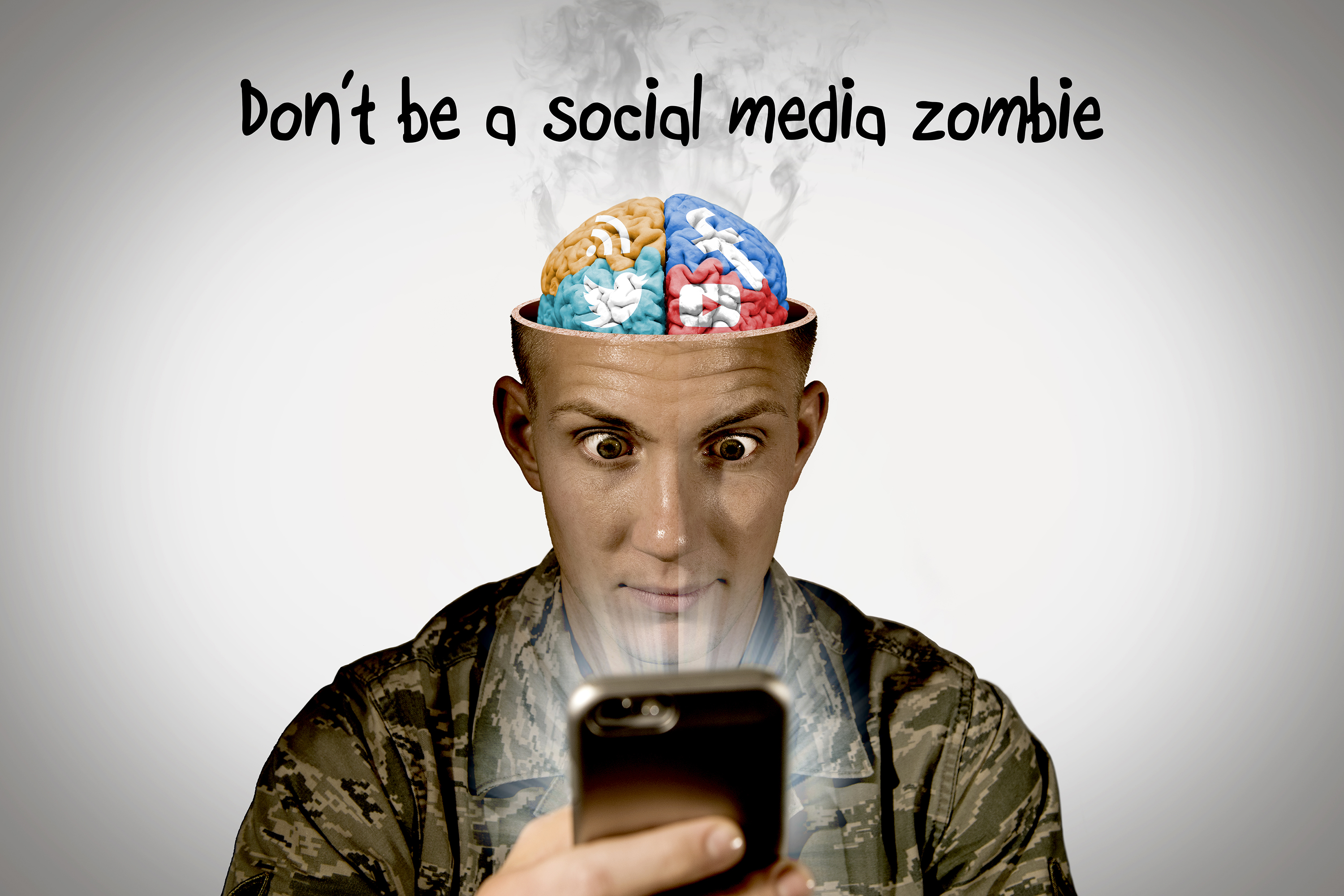
Image result for social media brain
https://media.defense.gov/2016/Jan/19/2001344196/-1/-1/0/151123-F-PO994-002.jpg
 When our amount of likes doesn't reach the expected or hoped for number some of us may feel rejected or not loved. This is a direct example of "me." It reminds me of Simone's blog on her questioning why one of her followers isn't liking her post anymore, over-analyzing it to the extremes. This is easy to do when talking about social media but, when we obsess with these things does it carry over into our everyday or social lives? I believe this makes us question our friends when they don't come out for a couple weekends. Instead of our minds thinking practically like 'oh they're just busy', we may begin to question if they're upset with us or avoiding us. In social interaction I believe some of us may begin to get upset if we're not getting the same excitement in conversation than usually.
Do our socials make us think of ourselves too much?

I think we also get a more selfish attitude from being too into our socials as well. The constant analyzation of ourselves leads us to be blinded from what all is happening around us. Naturally as humans we are selfish beings, so we don't need to think of ourselves anymore than we already do. It's quite obvious the reasons when we get too involved with our socials we would be lead to become too self-centered. Especially if you suddenly went viral or had a rise in followers, this would raise your self-esteem, which sounds good and dandy because it seems that socials are always lowering self-esteem. Is this materialistic success really something to glorify yourself for? Even if we don't realize it I think this glorification of "fame" or more likes leads us to think more of ourselves than others. It also could give a false feeling of entitlement, as if we deserve to get our way constantly.


Mead, Myself, and I


George Herbert Mead had an interesting interpretation of what it meant to be a person. He conceptualized the idea of “Me” and “I”. “Me” encompasses what others think of you, how they see you, and the attitudes of your community. This piece of you is socialized and wants to follow norms. Your “Me” is satisfied when people like you and you are aware of it. If I wore my shoes on the wrong feet for an entire day, I am breaking the social norm of wearing shoes on the right feet and may be rejected by those around me. This may come in the form of rude glances or head turns. My “Me” would be very embarrassed and disappointed because I perceive myself to be unaccepted by those around me. It should be noted that the “Me” is a double-sided coin. While it requires others to have perception of you, you must also know this and throw together an idea of what they must be thinking, which can be done subconsciously. Even after all that, your opinion of how others see you STILL may not be accurate. Your “I”, on the other hand, is a bit more complicated. Some sociologists would turn their heads at the idea of an “I” or inner self existing. Mead thought of the “I” as intrinsic qualities that are the foundation of your being. Your “I” does not follow the rules of socialization and thinks impulsively.

After a few days of discussing what any of this means in class, there is still no clear answer. If you gear your actions to please your “Me”, you are conforming to all norms and trends to match what those around you enjoy. This also makes you the biggest people-pleaser, as other’s approval feeds your desire to be well-liked. Granted, we all know that you cannot be liked by everyone. To satisfy your “I”, you would act according to your own personal desires regardless of anyone’s opinions against you. One could assume that a person with a strong “I” would be confident because they are being as true to themselves as possible. I doubt this is always the case.

I read Mead’s idea of “Me” and “I” as almost having an inverse relationship, where the stronger the “Me” a person has, a weaker the “I” and vice versa.

For example, throughout my first two years of high school, I tried extremely hard to make myself enjoy football. I read up on the rules, memorized a few names of star players, looked up the lingo, and cheered whenever everyone else did while watching the games. I did so in hopes that I would seem cool to a boy I was interested in at the time. If I could achieve that (and all the upkeep), I would fulfill my “Me” and get to sleep at night knowing that I fooled him into thinking I was even slightly into sports. (I’m cringing too). The point is whenever I would approach this boy and tell him about the terrible referee call on Sunday knowing no idea what that meant, I was completely abandoning my “I” at the sake of being accepted. Although my story is embarrassing and childish, I think we all have one. Another example could be authors of self-help books that write all day about how not to care about what others think of you. Unfortunately, the author’s book must be liked to sell and make him or her profits. The most common one I see is people posting about their self-care days and organizing their wine and candles to look like a perfect moment of relaxation… for their Instagram followers to like or comment on.

A question worth considering is do you eventually have a strong enough sense of “I” that your value requires minimal acknowledgement of the “Me”?

Psychologically, the need to be liked and to “fit in” is primitive. The cavemen needed the people around them to like them, at least decently, to survive. You need your interviewer to like you to get hired. A child needs to be liked by their parents to get love and attention. I’d like to put it out there that (a) there is nothing wrong with wanting to be liked, and (b) even all your effort working against your “me”, these considerations are often subconscious. It is impossible to get away from other’s perceptions of you so don’t shame yourself for putting consideration into what they think. However, it is essential to remember that you can’t please them all and that attempting to do so fades your concept of self.  

Trying to give less value to your “Me” is a heavy-weighted task, but if the “Me” and “I” are inverse, than strengthening you “I” would cause your “Me” to become lesser. You can solidify your “I” and express your inner self in healthy ways such as making art or music, writing, playing a sport you enjoy, etc.  

With all things in consideration, I don’t think you ever have a strong enough sense of “I” to set aside you “Me” completely and I don’t necessarily think that is bad. We need criticism and feedback and to understand how people think of us to avoid danger. Our ability to put ourselves in someone else’s head and imagine how we present ourselves is a skill, not a downfall. We just can’t waste it all on posts, likes, and retweets.

Friday, January 24, 2020

The World And Social Media: The Affect It Has On How We See Others And Ourselves

I was reading the article by Novak and while it was quite entertaining and hysterical to read, I felt like he was on to something. The point I got out of his article was that people in today's day and age will use just about anything to gain a like or views on social media. Social media very rarely focuses on connecting with each other and keeping up with what is happening in the lives of others even if we are 1,000 of miles away in a foreign country, but to be that next person that goes "viral" or create a new trend. This can be entertaining to an extent and while Novak may have been exaggerating, I think he was generally pretty serious in terms of where we might be headed as technology makes leaps and bounds in its advancement.

In his blog, he makes the baby seem as more as product being advertised rather than enjoying the fact that the family birthed a new son. I have seen it countless times where people are aiming to be "Tik Tok famous" or they do whatever it takes to become that next YouTube sensation. The other day I was talking with a friend and she told me about how she was teaching younger kids. She mentioned how these kids are always saying and doing things from Tik Tok she doesn't understand so she decided to get the app to keep up with the latest trending videos so she can understand what it is the kids are talking about. It surprised me to hear this because it's come to a point where even the younger generation has phones and are being influenced by this stuff at a young age.  
It is clear to see that parents can play a part in this as well, not just the kids themselves. Parents can even go as far as pushing their kids to become that next YouTube sensation. Novak in a humorous way was trying to show us the obsession society possesses with social media. We go as far as making accounts just for our dogs and our children and at times it can become an all out competition.

Looking at how society is today, social media has now become one of the vocal points of Mead's 'I and me' theory. Social Media (doesn't matter what it might be g.e. Twitter, Instagram, SnapChat, Facebook) tells us how we should look and keeps us up to date with what might still be trending and what is old and slowly being forgotten. The objective of social media is to have the user never satisfied, always trying to get more likes, always trying to get more followers or friends, and consuming most of their time and energy on there. As a result of this, social media ultimately controls what we see and how we might see them thus forming the me aspect of a person.

The I and me I believe go together, very rarely have I not seen it linked in some way. As we discussed in Wednesday's class, we tend to conform to what society and people tell us we need to be or how we should act. As I said earlier, social media has a huge part to play in the I and me theory by Mead, but largely focuses on the I side. The I has to do with how we view ourselves and social media can often be the cause of why we alter our views with how we might see ourselves, especially concerning women. I can't tell you how many times I have heard a woman complain about how they look. Social media sets a standard that in some ways people are unable to achieve, but often times many try. Now I am not totally putting social media down, I understand the real world plays a bigger impact most of the time in terms of how we view the 'me' side of us. Often times in school we conform to being a certain way in order to fit in to a group. 

Saying all of this makes it seems as though the world, parents, and social media are all controlling what we see, how we see it, and therefore makes us who we are and the 'me' overpowers the 'I'. It's almost an endless slope to disprove someone who might believe that and I wouldn't blame them for believing that. We could make the case that we have free will and therefore the I is the ultimate driving point but even if we defy our parents for example, we could claim that we are conforming to that which social media or the world has taught us to behave or act. I think it's ultimately up to how you might view it but I don't necessarily think you could go wrong either way.

HEY! CLICK ON THIS LINK TO LEARN ABOUT CLICKBAIT! AM I DOING THIS RIGHT!?!?


While I might not have a complete and total grasp on the topic at hand, I think I can understand the idea of the “Me” and “I” well enough. In this context, the “Me” is mainly about people conforming to the norms of the society around them, in an attempt to be accepted by those others in the community. In opposition, the “I” works off of the “Me” to become more individualized, to allow people to have a more individual feel. Those are the basic ideas that I have read about in the readings for this week in class, and I can’t think of a better way to personify these two ideas than with Youtube. In particular, I really want to look at the idea of the “Me” in terms of Youtube thumbnails.

For the many years I have watched Youtube, one thing in particular has always stood out for me, and not always for the better. Whenever I see a thumbnail on Youtube, my mind immediately goes to one of two places. Either “Oh wow, that video looks kinda cool, I’d be up for watching it!” Or “Ugh, more clickbait… I’ll still watch it, just to see if it’s true or not.” The idea of clickbait on Youtube is nothing remotely new. It’s been around for years, and has continued to grow in popularity as time goes on. Some might ask what exactly clickbait is. Clickbait is supposed to “bait” you into looking at a video, a website, or more by throwing you things that you might want to see at you. For example, one Youtuber I used to watch by the name Nightblue3 has a lot of thumbnails for videos that would be considered clickbait. His content is mainly geared towards League of Legends, one of the top grossing MOBAs (Multiplayer Online Battle Arenas) in 2020. Now, what make his thumbnails clickbait is the content within them. From the images of champions within the video game to the facial expressions he sometimes chooses to use on them, to even the bold, yellow font that he chose to use, all of this is geared towards drawing you in to watch the videos. Half the time, however, these videos don’t feel as though they deliver what you want to see, or fall short just a bit of what was expected. And yet, most of the time people watch these videos all the same, simply because the thumbnail stood out so much that we couldn’t resist clicking on the video.

            In a way, the idea of the “Me” can certainly be joined together with the idea of entertainment and advertising. Many companies advertise by trying to show things that people would want to see, things that can help relate to their audiences. Sometimes the things they show have almost nothing to do with what they are selling, simply done in order to gain the attention and, hopefully, the support of their audiences. This is absolutely what clickbait does, as it is a means to garner the support of audiences without even allowing them to watch the video first. Though, there is always that “I” input that these Youtube channels use, as they customize their own clickbait to fit accordingly with what they are attempting to advertise. While Nightblue3 has one style of clickbait, another Youtuber like Mini Ladd has another form of clickbait to advertise his own videos. The incredibly powerful use of clickbait has become so strong that it is nearly impossible to scroll through Youtube without seeing at least two to three thumbnails that are clearly meant to draw in the viewer. It could be argued that these Youtubers are using this as their own form of “commercials” akin to commercials one might see while watching TV. If they don’t seem interesting enough, or if they don’t bait a person hard enough, the video won’t get as many watches as they hope for. And, as Youtube is their form of income, that wouldn’t be very good for them. Thus this need for clickbait comes up, applying the idea of the “Me” once again. If the Youtuber doesn’t follow the example of others for how they advertise their channel, how are they going to hope that they bring in more, newer people to help add on to their payroll?

            Although I certainly don’t care to see clickbait thumbnails on Youtube, I can understand the need for them, and their purpose. They’re meant, in a way, to be annoying. They’re meant to get in your face and force you to stare at them, wondering “What’s in this video?” This need for clickbait on Youtube continues to rise higher and higher, everyone following one-another’s examples in order to become popular and noticed on the platform. Even if their video is original and interesting, Youtubers would continue to create clickbait in order to draw in people, in hopes of garnering themselves more support and more viewers to help line their pockets.

Final Paper, Part 2: Literature Review

hdstsytsdystsutsyt Literature Review Social platform reddit can tell us a lot about the impacts pandemic. For example, Hossu and Pardee ( 20...